REVIEW · EDINBURGH
Medical and Surgical History of Edinburgh – Private Walking Tour
Book on Viator →Operated by 7 Hills Tours Edinburgh · Bookable on Viator
Medicine has its own street-level trail. This private walking tour connects Edinburgh’s medical and surgical past to real closes, halls, and institutions you can still see today, with a guide who brings physician-level stories to life as you walk. I especially love how the route links big medical milestones to small street details, and how the pacing keeps the history readable instead of a textbook slog.
The one thing to consider is the physical side: you’ll cover about 2.5 miles over 3–4 hours, so it’s not a great match if you have chronic or painful musculoskeletal issues.
In This Review
- What You’ll Get on This Medical History Walk
- A 3–4 Hour Walk Through Edinburgh’s Medicine, Surgery, and Training
- Starting at Hunter Square: The Royal Mile and Edinburgh’s First Medical Streets
- Cowgate and Robertson’s Close: From The Little House to the Royal Infirmary
- Surgeons’ Hall Museums: Training, Gender Battles, and a Built-In Break
- University of Edinburgh Medical Days: Drudgery, Compensation, and Darwin’s Old Lodgings
- Lauriston Place Finale at the Former Royal Infirmary
- Coffee, Comfort, and Timing: How to Make This Walk Feel Easy
- Price and Value: Is $130.44 a Good Deal?
- Who This Tour Fits Best (and Who Should Rethink It)
- Should You Book This Edinburgh Medical Tour?
- FAQ
- How long is the Edinburgh medical and surgical private walking tour?
- Where does the tour start?
- Where does the tour end?
- What’s the price per person?
- Is the tour private?
- What language is the tour offered in?
- Are museum admissions included?
- Is coffee or tea included?
- What should I do if I have mobility concerns?
- What happens if weather is poor or I need to cancel?
What You’ll Get on This Medical History Walk
- A guided medical timeline in plain English, focused on origins, institutions, and training in Edinburgh
- Royal Mile to Royal Infirmary area: you move through the city like the history happened on your feet
- Stops where admission is free, including Surgeons’ Hall Museums
- A refreshment break built into the route (coffee/tea not included, but you get time to stop)
- A private group experience so your questions don’t get lost in the shuffle
A 3–4 Hour Walk Through Edinburgh’s Medicine, Surgery, and Training
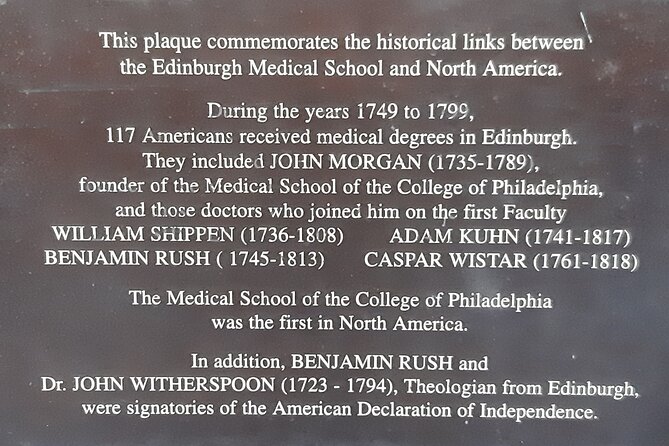
This tour is built for people who like their history with foot traffic. You’re not just looking at plaques—you’re walking the corridors of Edinburgh’s medical evolution, from early teaching spaces to the grand institutional buildings that followed. Expect about 3 to 4 hours and roughly 2.5 miles of walking at a moderate pace.
It’s also a private tour, meaning it’s only you and your group. That matters here because the conversation style is part of the value. In reviews, guides named Moray and Dr. Grigor are singled out for being warm, energetic, and comfortable talking about healthcare and its social side—so if you like asking follow-up questions, this format works well.
A practical note: it’s offered in English and runs best when the weather is good. You’ll also want comfortable shoes and layers, because Edinburgh can change its mood fast.
You can also read our reviews of more walking tours in Edinburgh



Starting at Hunter Square: The Royal Mile and Edinburgh’s First Medical Streets
You begin at Hunter Square in Edinburgh’s EH1 area. From there, the tour heads down the Royal Mile, Edinburgh’s oldest main street—except this time, you’re reading it as a medical map.
At the first stop, you’ll connect the origins of Edinburgh medicine and surgery to the street-level places where early medical community activity took shape. You’ll also see the alleyway where the College of Physicians began. That’s the kind of detail that makes this tour click: you look up and realize the city itself is part of the archive.
This portion is about 45 minutes. Since it starts with the story foundation—how medicine organized itself in the city—it’s a good place to start on your trip if you want a framework for understanding later stops.
Cowgate and Robertson’s Close: From The Little House to the Royal Infirmary
Next up is Cowgate, just off the main drag, where you’ll locate Robertson’s Close—often described as the site of The Little House. This is where the tour shifts from origins into real teaching infrastructure.
From there, you explore the complex of its successor: the first Royal Infirmary of Edinburgh. The point isn’t just the buildings. It’s how patient care and training grew together, and how a city’s institutions shape what doctors learn and how they practice.
This stop runs about an hour, which feels right because it’s one of the route’s anchor segments. You get enough time to take in the tight streets and the institutional story without rushing. If you’re the type who likes seeing how a “modern system” took shape from earlier experiments, you’ll enjoy this stretch.
Surgeons’ Hall Museums: Training, Gender Battles, and a Built-In Break
At Surgeons’ Hall Museums, you get a change of pace. This is where the tour blends history with context about the surgical profession—your refreshment break happens here too.
The museum stop is also where a major social storyline enters: the long fight for women to be admitted to medical school. Even if you don’t usually track gender history, this is one of those chapters that makes the whole medical timeline feel more human. Medicine wasn’t just discovering cures; it also had to decide who was allowed to learn the craft in the first place.
Plan on about 45 minutes. Reviews mention that the guide keeps the pace and tone engaging here, so you’re not just standing and reading. Also remember: coffee and/or tea isn’t included, but you’ll have time to use the cafe stop that’s part of the flow.
University of Edinburgh Medical Days: Drudgery, Compensation, and Darwin’s Old Lodgings
After Surgeons’ Hall, the route moves toward the University of Edinburgh area, where you’ll hear about the former home of the medical school and why Edinburgh became such an important medical center.
This stop is shorter—around 20 minutes—but it carries weight. You’ll hear about the developing importance of Edinburgh as a medical hub, plus the less glamorous side of training: the drudgery of being a student and the compensations that made it bearable. That balance helps if you’ve ever wondered how students handled the workload long before modern education tools.
Then you pass Bristo Place, where Charles Darwin’s old med student lodgings were located. You’re not doing a museum visit here; it’s more of a vivid street moment. Still, it’s a great example of how medical history in Edinburgh isn’t locked in one building—it’s scattered across the places students lived, studied, and waited out the next lecture.
You can also read our reviews of more private tours in Edinburgh




Lauriston Place Finale at the Former Royal Infirmary
The tour culminates near Lauriston Place at the former Royal Infirmary site. The end is at the Edinburgh Futures Institute, part of the University of Edinburgh, and you’ll finish in the grand front courtyard.
This final segment is about 15 minutes, but it lands the story. You’ll hear stories of major doctors and surgeons associated with the institution—closing the loop from early origins, to teaching hospitals, to the established medical center that could attract and produce leading practitioners.
It’s a smart way to end. Courtyards give you a feeling of scale, and finishing at a university-linked site helps you connect the medical story to what’s still happening in Edinburgh today.
Coffee, Comfort, and Timing: How to Make This Walk Feel Easy
Even though the route is only about 2.5 miles, you’re on foot for 3–4 hours. That’s enough time that small comforts matter.
Here’s what I’d plan:
- Wear shoes with real grip. Edinburgh’s sidewalks can be uneven.
- Bring a light layer even if it’s mild when you start.
- Use the built-in break at Surgeons’ Hall for a reset. The tour includes time for refreshment, but food and drink aren’t included.
The pacing is also designed to keep the history moving. The longer stops help you absorb the heavier themes, while the shorter ones keep you from losing the thread.
And because the tour is private, you’re not stuck with a rigid group pace. If your day runs long, that flexibility can help you still enjoy the walk instead of rushing to the next stop.
Price and Value: Is $130.44 a Good Deal?
At $130.44 per person, this isn’t the cheapest way to get around Edinburgh—but it’s also not trying to be. The value comes from a few specific ingredients:
- Private guiding: You’re paying for a dedicated, conversational guide, not a mass-audio tour.
- Institution-focused stops: The route uses major medical landmarks rather than generic city sights.
- Free admission tickets where they apply: Several stops include admissions that don’t add extra costs.
- Time-saving context: Instead of reading about Edinburgh medicine yourself, you’re getting the storyline organized for you—plus explanations of why the city mattered.
If your travel style is “I want to understand what I’m seeing,” this price can make sense quickly. If you mainly want broad sightseeing with minimal walking and minimal talking, you might decide it’s more than you need.
Who This Tour Fits Best (and Who Should Rethink It)
This tour is a strong match if you:
- enjoy history that connects to real places you can stand in
- like medical and social history side by side
- want a guide who can turn institutions into stories (reviews specifically mention lively, enthusiastic narration from physicians like Moray and Dr. Grigor)
It may not fit as well if:
- you have chronic or painful musculoskeletal conditions (the tour notes you wouldn’t recommend it for those situations)
- you’re looking for a low-effort experience with minimal walking
One more practical point: it’s near public transportation, and service animals are allowed. So even if you’re not driving, you can still get yourself to the start at Hunter Square without making it a whole day logistics project.
Should You Book This Edinburgh Medical Tour?
If you’re the kind of traveler who likes your city to have layers, book it. The route hits meaningful institutions, and the guide attention makes the story feel personal instead of distant. The free admission stops and the built-in break add real value too, and ending at the former Royal Infirmary courtyard gives you a satisfying finish.
I’d skip it only if walking 2.5 miles over 3–4 hours will be uncomfortable for you. Otherwise, this is a smart pick for anyone who wants Edinburgh beyond castle views—specifically, the way medicine took shape in the streets and buildings around you.
FAQ
How long is the Edinburgh medical and surgical private walking tour?
The tour runs about 3 to 4 hours.
Where does the tour start?
It starts at Hunter Square, Edinburgh EH1, UK.
Where does the tour end?
It ends at the Edinburgh Futures Institute (The University of Edinburgh), 1 Lauriston Pl, Edinburgh EH3 9EF, with the tour finishing in the grand front courtyard.
What’s the price per person?
The price is $130.44 per person.
Is the tour private?
Yes. It’s private, so only your group participates.
What language is the tour offered in?
The tour is offered in English.
Are museum admissions included?
Admission tickets are free for the stops that list admission ticket details.
Is coffee or tea included?
No. There’s a refreshment cafe stop, but food and drink are not included.
What should I do if I have mobility concerns?
The tour requires moderate physical fitness and covers about 2.5 miles. It would not be recommended for people with chronic and/or painful musculoskeletal health conditions.
What happens if weather is poor or I need to cancel?
The tour requires good weather. If it’s canceled due to poor weather, you’ll be offered a different date or a full refund. You can cancel for a full refund up to 24 hours in advance.