REVIEW · EDINBURGH
Ghosts of Edinburgh: Bloody Past Exploration Game and Tour
Book on Viator →Operated by Questo · Bookable on Viator
The scariest part is how quickly you start looking. This self-guided ghost-themed game turns Edinburgh landmarks into a puzzle route you can play offline and at your own tempo, with no need to follow a fixed guide script.
I especially like the start/stop flexibility—you can begin at any hour and pause whenever you want, then come back to finish later. I also like that it’s built for real exploring: you’re encouraged to look closely and figure out the story behind places like St Giles and Mary King’s Close. One drawback to plan for: some challenges require careful reading, and if you’re moving with kids or a group that wants quick wins, you may find a few parts more time-consuming than you expect.
If you want a straightforward, budget-friendly way to see both the New Town-to-Old Town transition and the darker legends around the Royal Mile, this is a fun option. The trick is setting yourself up right with a charged phone and comfortable shoes—because a game only works when you can actually play it.
In This Review
- Key things I’d bet on before you go
- Price and value: what $7.21 gets you in Edinburgh
- How the self-guided game works (and why offline is a big deal)
- Route reality check: from The Mound to Old College
- Starting at The Mound: the man-made slope with a haunted vibe
- Edinburgh Castle challenges: Castle Rock, Iron Age clues, and plot momentum
- St Giles: a leper saint, Lazarites, and clues with medieval weight
- Mary King’s Close: when the Royal Mile stays above, and the past stays below
- Greyfriars Bobby Fountain: William Brodie’s statue and the story of the payment
- The Grassmarket: from cattle fairs to the grim edge of public execution
- New College and Thomas Chalmers: a Free Church stop on the Mound
- Scottish National Gallery of Modern Art: modern buildings, old stories nearby
- Old College and Robert Adam: where the University replaced earlier buildings
- When to play: night feels spookier, but day is fine
- Practical tips so the game actually feels fun
- Who this is best for (and who may want a different style)
- Should you book Ghosts of Edinburgh?
Key things I’d bet on before you go
- Offline play means you can keep going even if signal is sketchy on the streets.
- Flexible timing lets you choose the hour, rather than racing a schedule.
- Puzzle-driven route turns famous sights into something you actively search for, not just pass by.
- Family-and-friends friendly pacing makes it easier to enjoy as a group without one person “leading.”
- Exterior-first design helps you keep moving without needing paid attraction entry to complete the game.
- Dark-history stops (like the Grassmarket) give the ghost theme real teeth.
Price and value: what $7.21 gets you in Edinburgh
At $7.21 per person for roughly an hour of play, this falls into the category of “small cost, big payoff” sightseeing. You’re not paying for a live guide’s talking time. You’re paying for a structure—prompts, challenges, and a route—that gets you walking, thinking, and noticing details that you’d normally speed past.
A low price also helps if you’re traveling with friends or family. The offer includes group discounts, and if your group is larger than 15, you can make multiple bookings instead of abandoning the idea. That matters in Edinburgh, where splitting into smaller chunks can keep everyone from turning into a slow-moving crowd.
The main value trade-off is this: because it’s self-guided, you’re responsible for the experience mechanics—your phone battery, your attention, and your pace. If you want someone to herd you from stop to stop, you’ll miss that.
You can also read our reviews of more tours and experiences in Edinburgh



How the self-guided game works (and why offline is a big deal)

This is a mobile-ticket experience that you play through an app (provided by Questo). The big practical win is offline play—you don’t need an internet connection to do the game. In a city like Edinburgh, that’s not a small detail. You can walk, pause, and keep going without constantly checking for bars.
You also get true flexibility:
- Start at any hour
- Take a break at any time and resume later
- Play anytime after booking without needing a reschedule
That means you can shape the route around your day. If you’re tired from museums, you can pause. If you’re hungry, you can grab food and come back. If the weather turns, you can adjust your pace without feeling like you’re behind.
The other key thing: this is private for your group, not a mixed group tour. That helps the “game” feel more like your hangout than an awkward queue.
One consideration: if your phone takes time to load into your account, that can steal minutes right when you’re ready to start. The fix is simple—test the app and sign-in before you leave, and make sure your battery is healthy.
Route reality check: from The Mound to Old College

You’ll start at The Mound (Edinburgh EH2 2EL) and finish at 100 W Bow (Edinburgh EH1 2HH). Even though the total is about an hour for play, your actual time will depend on how long you spend reading and solving.
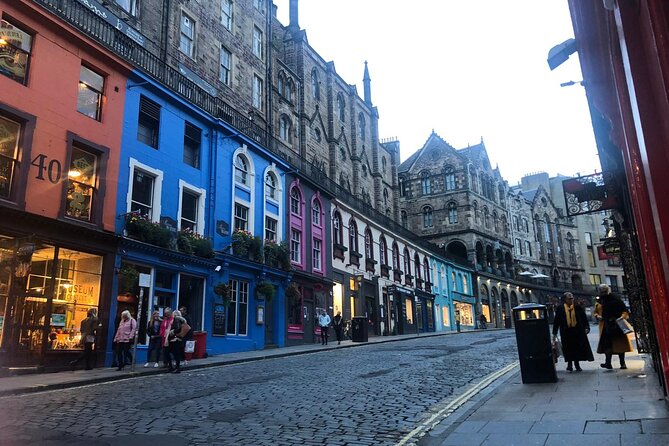
The route is interesting because it naturally mixes the big-silhouette viewpoints (like Edinburgh Castle and the Castle Rock story) with the narrow, story-heavy streets of the Old Town. It also gives you a split between famous tourist magnets and places you might not bother with—especially those tied to institutions and local legends.
In other words: you’re not just hitting postcards. You’re walking a path that explains why Edinburgh looks the way it does.
Starting at The Mound: the man-made slope with a haunted vibe
You begin at The Mound, the artificial slope that links Edinburgh’s New Town and Old Town. It was created by dumping around 1,501,000 cartloads of earth excavated from the New Town’s foundations into Nor Loch, which was drained in 1765. Today, you can see the results as Princes Street Gardens and the big visual bridge between eras.
In a ghost game, this kind of start works well because it sets up the idea that Edinburgh is built on layers—literal soil layers and metaphorical stories. The challenge here pushes you to look around and find the right answer before you move on.
Possible drawback: because it’s a viewpoint-area location with lots of sightlines, it can feel like you’re searching without clear context at first. Give yourself a minute to settle your bearings, then start scanning closely.
Edinburgh Castle challenges: Castle Rock, Iron Age clues, and plot momentum
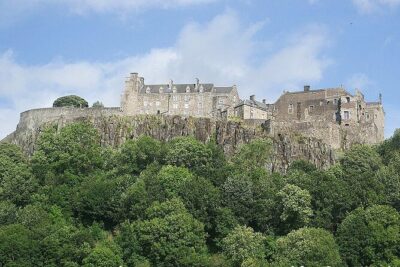
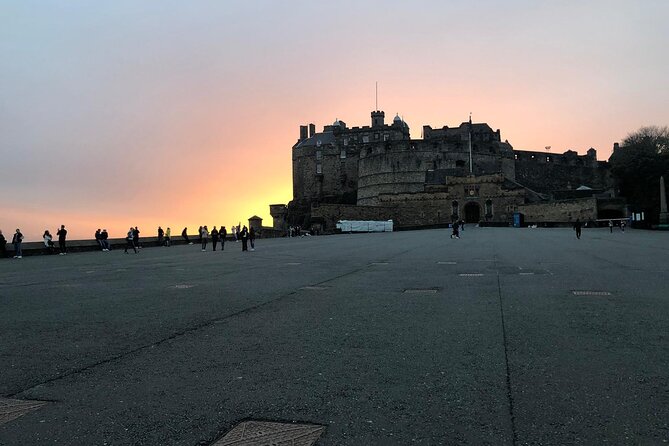
Next up is Edinburgh Castle, perched on Castle Rock and dominating the skyline. Archaeologists have established human occupation of the rock since at least the Iron Age, though the shape of early settlement isn’t clear.
This stop is a perfect fit for a game because Castle Rock is inherently dramatic. Even if you’re not going inside, you’re in the right emotional zone: stone, height, and legends all around.
A practical consideration is how puzzles can interact with paid attractions. One complaint described a puzzle that seemed to require entering Edinburgh Castle. The provider clarified that entrance to paid locations is not required to play the games. Still, in real life, you might find a clue directs you right up to the boundary areas. If you want zero hassle, plan on sticking to what you can do without buying entry, and be ready to use exterior viewpoints.






St Giles: a leper saint, Lazarites, and clues with medieval weight
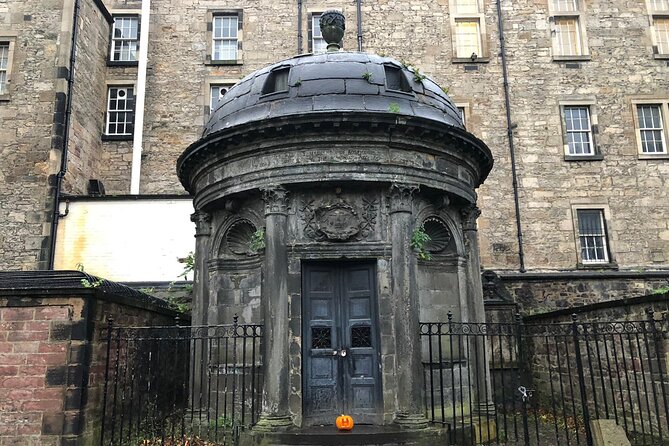
At St Giles, you’re dealing with a church whose origins go back to around 1130, when a parish church was built during the reign of King David I. The church was originally granted to the Lazarites, and St Giles was dedicated as the patron saint of lepers—and later as a patron saint of Edinburgh itself.
This is where the ghost theme can feel more than spooky decor. St Giles brings you into a place where public health, religious orders, and civic identity all overlap. That gives the game’s story-based challenges something substantial to chew on.
If you’re traveling with kids, this stop can work, but you may need to help with the reading-heavy part of the clues. It’s not a stop where you’ll learn much by just looking up at architecture—you’ll get more if you slow down and take the puzzle seriously.
Mary King’s Close: when the Royal Mile stays above, and the past stays below
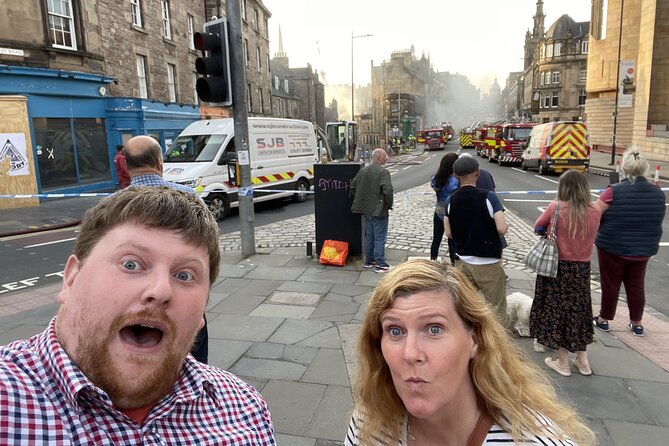
Then you shift into Mary King’s Close, a historic close under buildings on the Royal Mile. It’s named after Mary King, a 17th-century merchant burgess who lived on the close.
This stop is one of the strongest matches for the Bloody Past idea. Closes like this are perfect for legends because they compress time—what feels like a small alleyway can carry a bigger, darker story.
Practical tip: because it’s under-building space, it can feel cooler or narrower depending on where you are. Keep your group together and watch footing. For game players, it’s also a place where the phone can feel a little awkward—so pause near a stable spot before you start reading and solving.
Greyfriars Bobby Fountain: William Brodie’s statue and the story of the payment
The Greyfriars Bobby Fountain includes a life-size statue of Greyfriars Bobby created by William Brodie in 1872. It was paid for by Baroness Burdett-Coutts and unveiled on 15 November 1873. The fountain sits near the main entrance to Greyfriars Kirkyard.
This is a great stop for anyone who likes legends but also enjoys the real-world “who paid for it and when” details. The ghost game doesn’t just point you at lore—it hands you names and dates that make the story feel grounded.
In terms of play style, the puzzles at this kind of monument spot are usually best solved by looking carefully at the immediate surroundings—text, placement, and landmarks nearby—rather than trying to solve from a distance. Give yourselves those extra seconds.
The Grassmarket: from cattle fairs to the grim edge of public execution
The route then reaches The Grassmarket. The area dates back to the 1300s, and it was populated with cattle fairs and stables. Around the 1670s, it became a trading point for goods. And yes, it also has a grim side: it was a traditional place of public execution.
This is where “Bloody Past” stops being a theme tag and starts becoming real atmosphere. If you’re doing the game in the evening, you’ll likely feel the difference here. The space has edges—open-but-historical—and that helps the game’s mood.
Possible drawback: because it’s a well-known gathering area, you may be sharing space with other people. If you want smoother solving, choose a quieter moment and don’t get stressed if you can’t look at everything up close. Solve what you can safely read and move on.
New College and Thomas Chalmers: a Free Church stop on the Mound
At New College, the story is religious and institutional, built on the Free Church of Scotland’s theological college. It opened for classes in Edinburgh’s New Town on 1 November 1843 before moving to the Mound soon after. The foundation stone for the current building was laid by Rev Dr Thomas Chalmers on 3 June 1846.
This stop works in a ghost game because it shows another kind of Edinburgh haunting: not supernatural, but cultural. It’s the kind of place where beliefs, training, and public life shaped the city’s moral world.
Game-play note: institutional buildings can be less visually “explosive” than castles or closes. You’ll likely solve better if you treat the challenge as a scavenger hunt: locate the relevant points on the structure or nearby environment, then connect them to the story prompt.
Scottish National Gallery of Modern Art: modern buildings, old stories nearby
The route also includes Scottish National Gallery of Modern Art locations. It first opened in August 1960 at Inverleith House in Edinburgh’s Royal Botanic Garden. It later moved to its current site at Modern One on Belford Road in 1984. Then in March 1999, Modern Two opened across the road.
This stop gives you a useful contrast. You’re still playing a ghost-themed game, but you’re also getting a quick reality check: Edinburgh isn’t stuck in the medieval era. The city keeps building, and the legends keep shifting with time.
One possible mismatch: if you’re expecting purely gothic “boo” moments, Modern Art may feel more reflective than spooky. The trade-off is you’ll finish the whole experience with a better sense of how Edinburgh evolves.
Old College and Robert Adam: where the University replaced earlier buildings
You end with Old College, part of the University of Edinburgh. It houses parts of university administration, the University of Edinburgh School of Law, and the Talbot Rice Gallery. Originally called New College, it was designed by Robert Adam to replace older buildings.
Ending here is smart because it brings the experience full circle. You started at a man-made landscape shift (The Mound). You end at a building shaped by replacement and reworking—Edinburgh as a city that constantly rebuilds itself.
The ghost theme still fits, in a way. Old College is the kind of place where you can feel layers of purpose: education, governance, and culture, all living in the same envelope of stone.
When to play: night feels spookier, but day is fine
One review praised the experience as just spooky enough, especially at night, and liked doing it again with a teen. That tracks with how Edinburgh works: evening light makes the alleyways and stonework feel more intense, and the game naturally benefits from a darker mood.
That said, the game is flexible enough to fit daytime travel too. If you’re visiting with kids or you’d rather not walk in the dark, choose daylight and focus on the puzzle side—the stories are still there.
Practical tips so the game actually feels fun
Here’s how I’d set you up for success:
- Charge your phone before you go. You’ll be reading challenges and moving between stops.
- Take breaks if you need them. The experience is designed so you can stop and resume.
- Wear shoes you trust. You’ll be moving through streets and close-in areas.
- Be ready for tricky clues. Some puzzles can be hard to decipher if you rush.
- If you hit a snag, don’t force it. Move to a safe nearby spot, reset, and try again.
One more thought: when a complaint says the game points can feel far apart, that usually means you’re spending more time walking than you thought. If you want a tighter hour, keep your pace brisk and decide in advance how long you’ll spend at each stop.
Who this is best for (and who may want a different style)
This is ideal for:
- Families and groups who like doing activities together without needing a guide’s constant direction
- Friends who enjoy scavenger-hunt style walking
- Travelers who want to see more than the main landmarks and like story prompts tied to real places
- People who like the ghost mood but don’t want a full theatrical tour
It may be less ideal if:
- You want someone to explain everything out loud
- Your group hates solving puzzles
- You’re worried about app performance. If you’ve had issues with loading or account access, test the app earlier in your trip.
Should you book Ghosts of Edinburgh?
I’d book this if you want a budget-friendly, self-guided way to turn Edinburgh’s famous places into an active game. The big wins—offline play, flexible start times, and puzzles that make you look closely—fit a city trip perfectly, especially when you’re juggling museum fatigue or family schedules.
I’d hesitate only if your group needs a hands-on guide or if puzzle-solving feels like homework. Also, if you’re worried about app loading speed, plan to start the game only when you’re already on-site with decent phone power.
If you want something practical, slightly spooky, and built for your own pace, this one’s worth a spot on your Edinburgh day.