REVIEW · EDINBURGH
From Edinburgh: Outer Hebrides & Isle of Skye 6-Day Tour
Book on GetYourGuide →Operated by Rabbie's Small Group Tours · Bookable on GetYourGuide
Loch views beat jet lag every time. This Edinburgh to Outer Hebrides & Skye trip strings together ferries, photo stops, and local island towns without you driving yourself. You’ll move through Scotland’s far north on a 16-seat mini-coach, sleeping in en-suite B&Bs for five nights.
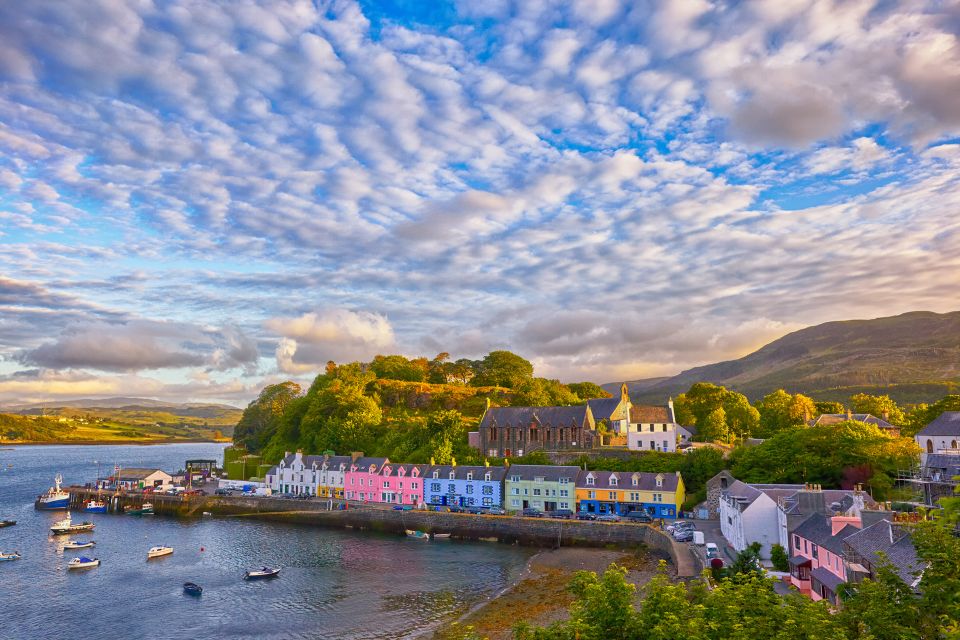
I especially like the combination of two styles: island life in places like Stornoway and Portree, plus big-name scenery such as Loch Ness and the Skye Quiraing. I also like that you get a proper ferry crossing day (not just a quick hop), with plenty of chances to spot wildlife like seabirds, and maybe whales or dolphins.
One thing to think about: the days are full, and some stops can feel brief if you want slow wandering. If you prefer lots of guidance on where to go and when to be back, come ready with questions and a clear plan for meeting points.
In This Review
- Key highlights to look for before you go
- Outer Hebrides and Skye from Edinburgh: what this trip does well
- Day 1: Dunkeld waterfalls, Loch Ness fun, and Ullapool’s harbor life
- Day 2 ferry day: Loch Broom to Stornoway across the Minch
- Day 3 on Lewis: Arnol Blackhouse and Dun Carloway before beach time
- Day 4 on Harris: Luskentyre sands, Harris Tweed, and a beach picnic option
- Day 5 on Skye: Quiraing walks, Kilt Rock waterfall, and Loch Coruisk choices
- Day 6 back to Edinburgh: Eilean Donan, Ben Nevis, and Glencoe’s memory
- Comfort, timing, and the mini-coach reality check
- Price and what you’re really paying for ($1,587 per person)
- Should you book this Outer Hebrides and Skye tour?
- FAQ
- How big is the group?
- What kind of transport is used?
- Are meals included?
- What admissions are included?
- Do you visit Calanais Standing Stones?
- How long is the tour?
- What time do you return on the final day?
- Is there a luggage limit?
- Is it suitable for young children?
- Is free cancellation available?
Key highlights to look for before you go
- Ferry day across the Minch with wildlife watching as the backdrop
- Arnol Blackhouse plus the older-than-you-expect stone fort of Dun Carloway
- Harris Tweed country and the white-sand feel of Luskentyre
- Skye icons with options like the Quiraing walk and a Loch Coruisk boat trip
- Small-group comfort on a 16-seat Mercedes mini-coach with an English-speaking guide
Outer Hebrides and Skye from Edinburgh: what this trip does well
This tour works because it’s built as a loop through Scotland’s west coast highlights, with the travel moments part of the experience. You start by pushing into the Highlands, then you shift into island mode with ferries and coastal towns. By the time you reach Skye, you’re not just ticking boxes—you’re riding that wave of scenery from day one.
The “small-group” part matters here. On a 16-seat Mercedes mini-coach, you still get a sense of togetherness with time to ask questions, but you’re not stuck with big-bus chaos. I also like the pace in general: breakfast keeps mornings moving, and the touring blocks leave you with evenings in real towns (not just roadside pull-offs).
You can also read our reviews of more tours and experiences in Edinburgh
Day 1: Dunkeld waterfalls, Loch Ness fun, and Ullapool’s harbor life
Day one is a classic Highlands warm-up, and it sets the tone for the whole week. You begin in Dunkeld with a short walk through forest toward waterfalls—an easy start that stretches your legs without making you work too hard right away.
Then the route climbs north through the Grampian Mountains toward the Spey Valley for lunch. After that, you hit the big-ticket stops: world-famous Loch Ness and a stop in Inverness. Whether you’re chasing Nessie vibes or just enjoying the water and hills, it’s a change of mood from the forest feel.
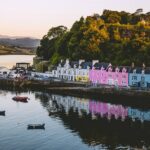
The afternoon includes Corrieshalloch Gorge waterfalls, which are dramatic and wet in that unmistakable north-Scotland way. You finish in Ullapool, a fishing port with a proper sense of evening life. It’s the kind of town where you can get food, reset, and still feel like you’re in the route rather than just passing through.
Practical note: this is a long first day. If you’re prone to feeling rushed, plan to keep your day bag accessible and be ready for frequent bathroom breaks along the way.
Day 2 ferry day: Loch Broom to Stornoway across the Minch
This is the day that feels like a reward. You catch the morning ferry for a two-hour sail along Loch Broom, passing the Summer Isles. Then you continue out across the Minch to Stornoway on Lewis, the main town and capital of the Outer Hebrides.
The crossing isn’t just travel time; it’s built for watching. During the sail, you can keep an eye out for seabirds, and the possibility of dolphins or whales adds that extra bit of excitement. Even if wildlife doesn’t show up, the horizon work—open sea, low cloud, changing light—still does the job.
Once you arrive, you head along the north-west coast with your driver-guide, taking in traditional crofting towns and seaside ports. This is where you start seeing how people actually live here: small settlements, working coastlines, and a slower rhythm than what you left in Edinburgh.
You sleep in Stornoway. In the evening, you can try the local black pudding, which the trip highlights as a must. Since meals aren’t included, you’ll be choosing your own restaurant, and that flexibility is nice if you have dietary preferences.
Day 3 on Lewis: Arnol Blackhouse and Dun Carloway before beach time
Today gives you the strongest sense of human history in the trip, without making it feel like a museum day.
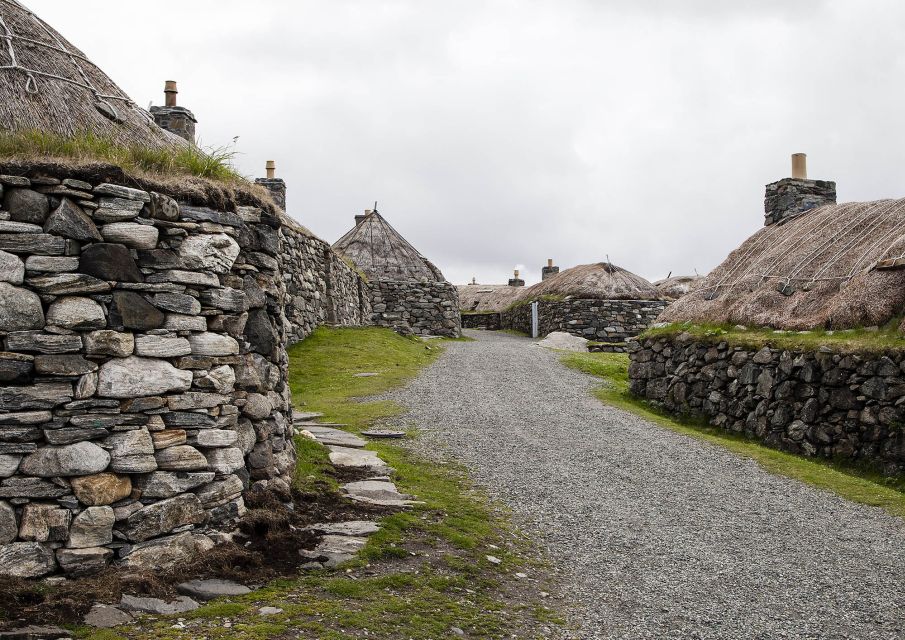
First stop is Arnol Blackhouse, included in the tour. It’s a look at traditional farming life, and it helps the rest of the route make more sense. When you later see stone forts and wide open coastlines, you’ll understand the logic: shelter, resources, and community on land that doesn’t always cooperate.
Next comes Dun Carloway, an ancient stone fort dating to before 100 AD. Even if you’ve seen plenty of ruins before, it feels different here because the surroundings still look like the kind of place people would defend and watch. It’s not “in town.” It’s out in the real terrain.
The afternoon is for western Lewis—beaches and mountains—so you get the best of both worlds: story, then scenery. You return to Stornoway late afternoon, which helps you keep the full-day rhythm without turning the day into a marathon.
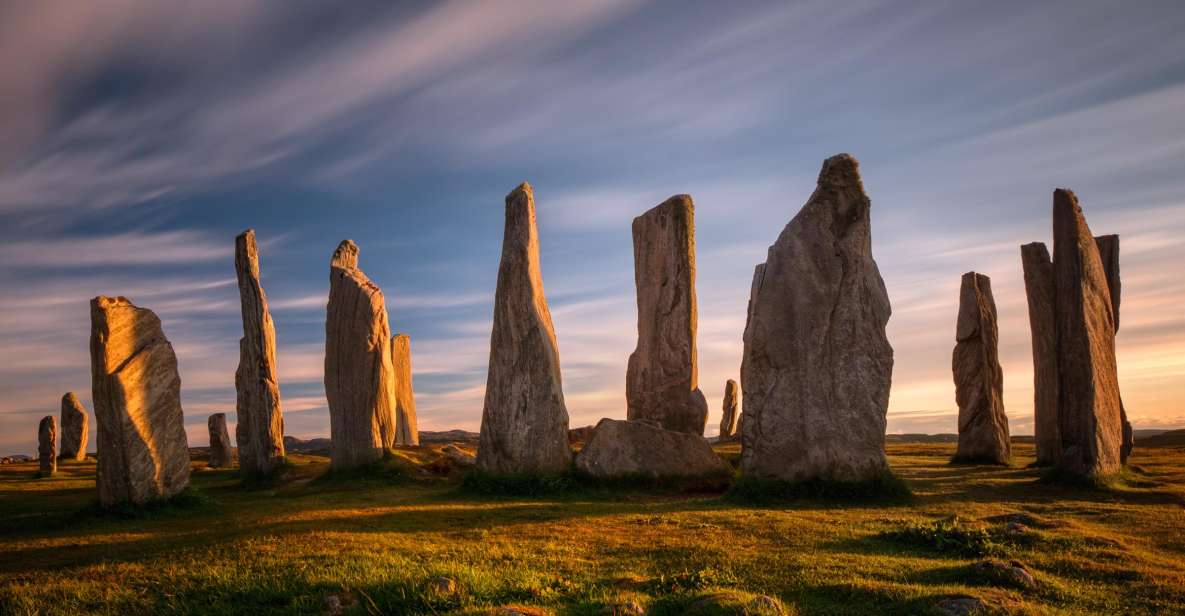
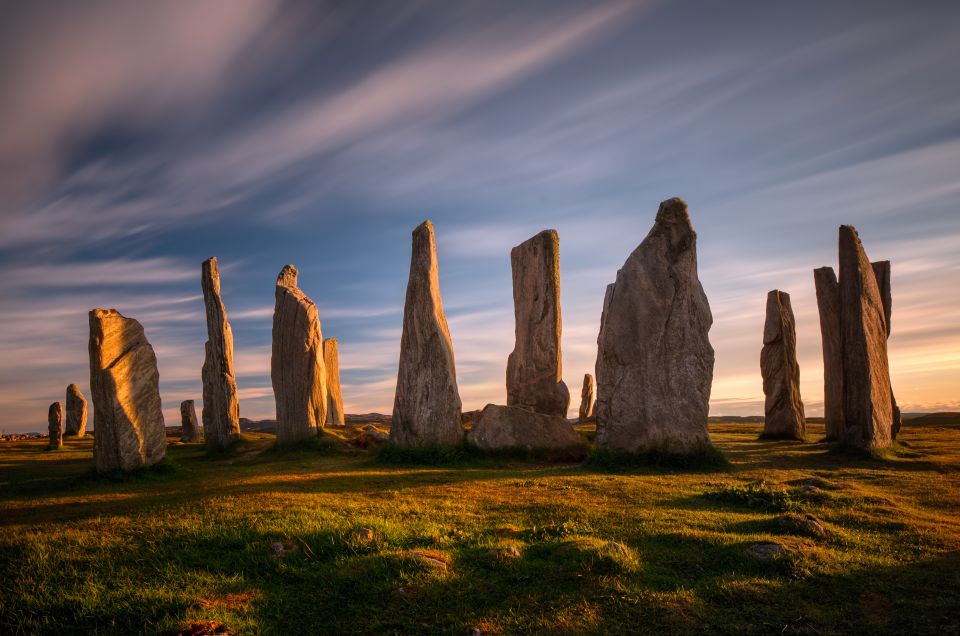
One heads-up: the Calanais Standing Stones visit may not happen on some dates. Due to redevelopment for preservation, the tour won’t be able to visit there until 8 June 2026. On affected departures, you’ll spend extra time exploring beaches on the west of the island instead, so the trade is more coast time rather than the standing stones.
Day 4 on Harris: Luskentyre sands, Harris Tweed, and a beach picnic option
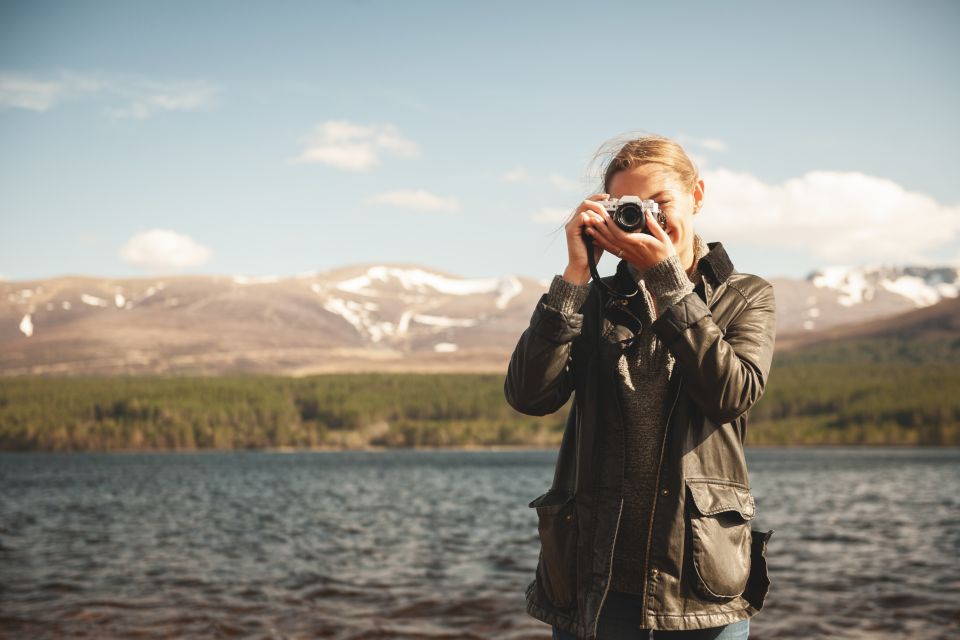
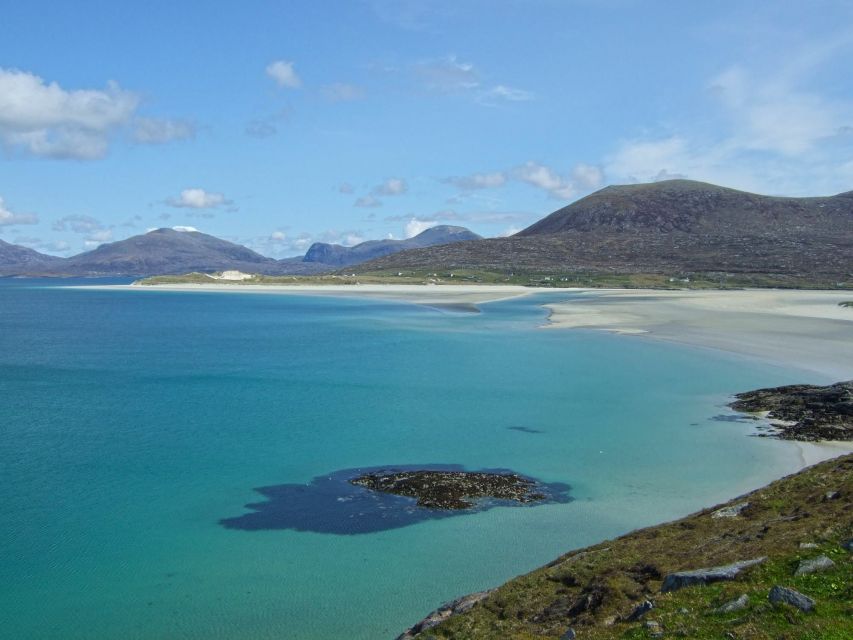
Harris is where the trip leans into “wow” territory. You’ll start with Harris’s dramatic scenery and a major highlight: Luskentyre, known for one of Britain’s best white-sandy beaches. This is the kind of place that makes you stop walking just to watch how the light behaves on the sand.
Harris is also tied to Harris Tweed and local myths, and the tour uses that connection to frame what you’re seeing. You’re not just staring at hills; you’re learning why island craft and storytelling matter in a place where weather can change fast and every resource has a role.
After a morning of exploring, you’ll have lunch. Depending on weather, there’s even a chance of a picnic on the beach, so plan for sun and wind both. Sunglasses help, but so does a jacket you can actually tolerate if the breeze grabs you.
In the afternoon, you take a ferry to Portree on Skye, where you stay for two nights. Portree is big enough to feel lively, with enough dining options to make evenings easy. It’s also a useful base: from here, Skye days become more manageable.

Day 5 on Skye: Quiraing walks, Kilt Rock waterfall, and Loch Coruisk choices
Skye day is built around the idea that every turn can change the view. You’ll travel to several top sights, and the order gives you both dramatic viewpoints and more walkable moments.
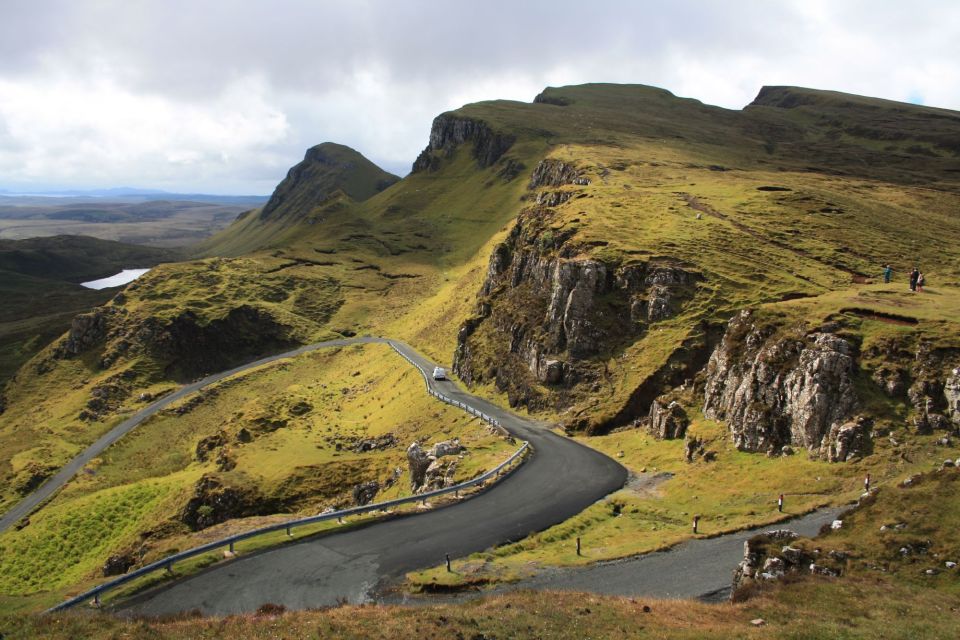
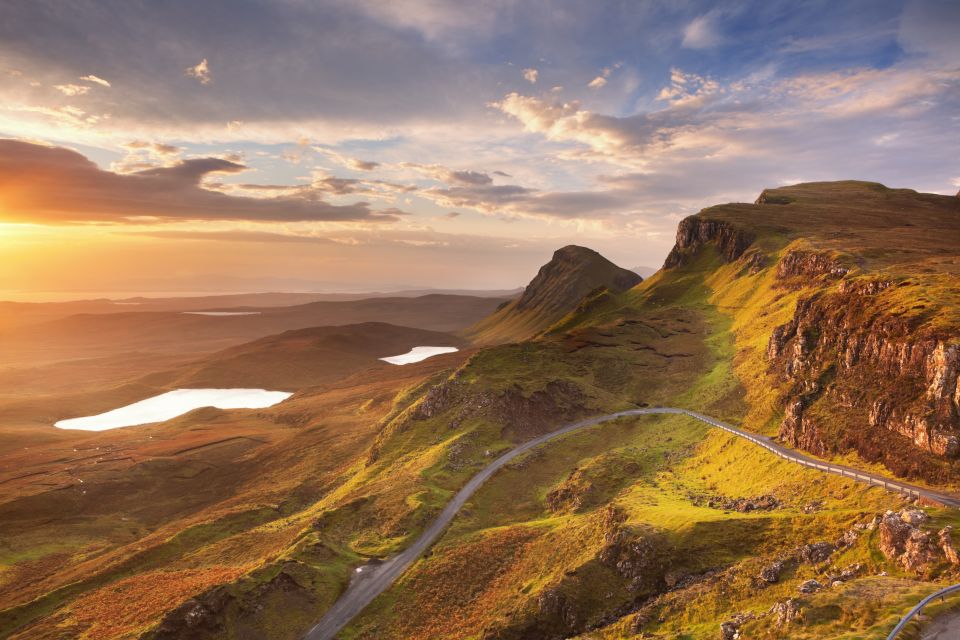
A common highlight is the Quiraing mountain pass, paired with a spectacular walk. It’s the kind of terrain where the ground folds and the weather line shifts quickly, so your photos look better when you stop and look up as well as ahead.
Next can be Kilt Rock, including a view of a gigantic waterfall. It’s the sort of stop where people naturally drift toward the water sounds, even if they arrived planning only one quick photo.
Another optional-feeling highlight is a boat trip to Loch Coruisk, described as the lesser-known angle on Skye. If you like the idea of getting out onto the water instead of staying on land viewpoints, this is where you can make the day feel more than just driving and parking.
You end back in Portree for your final evening. Since meals aren’t included, I’d plan to pick a seafood dinner that matches your energy level—something you can enjoy without rushing. Portree is also where you can do a last loop with your camera before the trip starts winding down.
Day 6 back to Edinburgh: Eilean Donan, Ben Nevis, and Glencoe’s memory
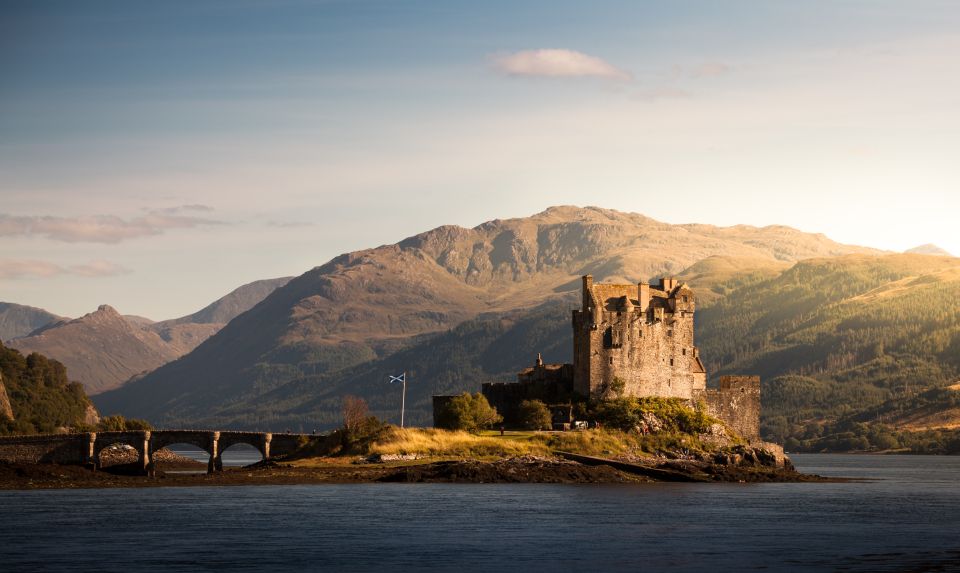
Departure day still carries weight. You cross the Skye Bridge, and the route is timed for a glimpse of Eilean Donan Castle, which is one of those classic Scottish images that looks like a postcard but also works in real life when the light hits.
Then you pass under Ben Nevis, Britain’s tallest mountain. Cloud can hide it, but that doesn’t ruin the effect—often it makes the mountain look even more dramatic as the weather moves.
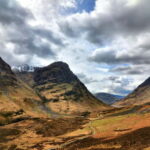
Next is Glencoe, called the Weeping Glen, tied to a tragic massacre in Scottish history. Even with limited time, it’s an emotional stop, and it lands best if you take a few minutes instead of treating it like another roadside photo.
As the Highlands thin out, you head into the Lowlands and continue to Edinburgh, arriving around early evening (about 19:00).
Comfort, timing, and the mini-coach reality check
This is a touring route, not a “sleep in late” vacation. You’re on a 16-seat Mercedes mini-coach with a driver-guide and frequent stops to break up the long stretches. That’s good for reducing stress compared to DIY driving, but it also means the day often feels like movement punctuated by short windows to see things.
Accommodation is bed and breakfast with five nights in small, locally owned guesthouses and B&Bs, typically with en-suite rooms. The rooms are clean and basic is a fair description, and that’s usually what you want for a trip like this: simple lodging so you can spend your energy outside.
A detail that matters: many B&Bs sit on the outskirts. You may walk 20–30 minutes to pubs and restaurants. If you dislike stairs, ask ahead because lifts aren’t available and these properties may have steps.
What you pack matters too. You’re limited to 20 kg (44 lbs) per person, ideally one main bag sized like an airline carry-on plus a small personal item bag. If you bring bulky extras, you’ll likely regret it once you’re hauling luggage in and out of guesthouses.
Finally, bring realistic expectations for stop navigation. In some groups, you may find the off-bus guidance isn’t as detailed as you want, and you’ll have less time to figure out where to walk. My advice: at every stop, confirm the meeting point and return time early, then go enjoy the view—don’t wait until you’re already confused.
Price and what you’re really paying for ($1,587 per person)
At $1,587 per person for six days, this isn’t a budget-only option. But it’s also not just a ticket for driving and snapshots. You’re paying for organized transport by 16-seat mini-coach, an English-speaking driver-guide, five nights of bed and breakfast, and included access such as Arnol Blackhouse.
The value comes from how much ground you cover without adding the strain of car rentals, driving on narrow roads, and parking. The ferry day to Stornoway is also folded into the rhythm of the trip, which saves you the planning time and decision fatigue you’d otherwise face.
Where the price might feel less worth it is if you hate tight time windows and want long stays at every stop. Some people will feel satisfied because the trip hits the major icons plus meaningful history. Others may wish for more time at each location, especially on day-heavy schedules.
One strong indicator of value is the guide effect. Some departures have featured guides like Mark, praised for being helpful and watchful step to step. Another name you might hear is Iain, an islander style of guiding that brings smart local context. Even when you don’t know the guide’s personality ahead of time, the structure here is built to be guided, not self-guided.
Should you book this Outer Hebrides and Skye tour?
Book it if you want a guided route that stitches together Lewis, Harris, and Skye with minimal hassle, and you’re happy with a pace that prioritizes seeing many key spots. You’ll like it if ferry travel, local towns like Stornoway and Portree, and a mix of history plus big scenery match your travel style.
Skip it or rethink it if you crave lots of time at each viewpoint, deep planning help on where to walk once you arrive, or you want a slower, more self-directed rhythm. This trip is built to keep moving, and it works best when you lean into the itinerary rather than fight it.
If you’re still deciding, my practical test is simple: do you want the structure and guide support, or do you want full control? For many people, the best Scotland West experience comes from letting someone else handle the routing—then you focus on the views and the moments you choose.
FAQ
How big is the group?
The tour is limited to 16 participants and uses a 16-seat Mercedes mini coach.
What kind of transport is used?
You travel by 16-seat Mercedes mini coach with a driver/guide.
Are meals included?
Meals are not included. The tour includes bed and breakfast accommodation for five nights.
What admissions are included?
Admission to Arnol Blackhouse is included.
Do you visit Calanais Standing Stones?
Not on dates when the site is closed for redevelopment. The tour states Calanais Standing Stones cannot be visited until 8 June 2026, and on affected dates you will spend extra time exploring beaches on the west of the island instead.
How long is the tour?
The duration is 6 days.
What time do you return on the final day?
On Day 6, you return at approximately 19:00.
Is there a luggage limit?
Yes. You’re restricted to 20 kilograms (44 lbs) of luggage per person, with one main bag and a small personal bag.
Is it suitable for young children?
The tour does not carry children under the age of 5.
Is free cancellation available?
The tour offers free cancellation up to 14 days in advance for a full refund.