REVIEW · EDINBURGH
Edinburgh’s must-see attractions: walking tour in French
Book on GetYourGuide →Operated by Wee Ecosse Ltd · Bookable on GetYourGuide
Edinburgh makes sense fast on foot. This 3-hour French walking tour gives you a clean mental map, with a small group capped at 11 and a guide who explains how the city ticks. I like that you start with the big views from Calton Hill, then walk the Old Town spine toward key monuments and viewpoints. One drawback to plan around: Edinburgh Castle is only viewed from the outside, not visited.
What really makes this tour useful is the way it links places to ideas—Scotland’s political setup, the UK’s structure, and everyday life like pubs and how people move around (buses and trains). I also like the small, focused pacing: it’s long enough to feel you made progress, but short enough to fit even a tight Edinburgh schedule. If you hate walking (or the weather hits hard), you’ll want good shoes and a rain layer.
You’re also getting more than sightseeing. Part of the tour profits goes to a local association working on poor housing, so it feels like a tour with a local conscience, not just a checklist.
In This Review
- Key highlights to look for
- Calton Hill first: your quick orientation to Edinburgh
- Scott Monument and the city’s habit of symbolism
- The Royal Mile: the main spine of the Old Town
- Mercat Cross and power in plain sight
- Edinburgh Castle: seen, not toured
- Victoria Street and the charm that feels lived-in
- Grassmarket: views, edge, and the feel of the neighborhood
- Greyfriars Kirkyard: the cemetery stop that teaches you how Edinburgh remembers
- What you learn beyond sites (and why it matters)
- Small group size: the difference you feel in a 3-hour walk
- Price and value: what $47 buys you in Edinburgh
- Who this tour suits best
- Things to plan for: weather, walking, and comfort
- Should you book this French walking tour of Edinburgh?
Key highlights to look for
- Calton Hill orientation before you hit the Old Town streets
- French-only live guide who connects monuments to the bigger story
- Old Town walking route covering Royal Mile landmarks and viewpoints
- Castle pass-by for the vibe without the inside visit
- Local context on politics, travel basics, and pub culture
Calton Hill first: your quick orientation to Edinburgh
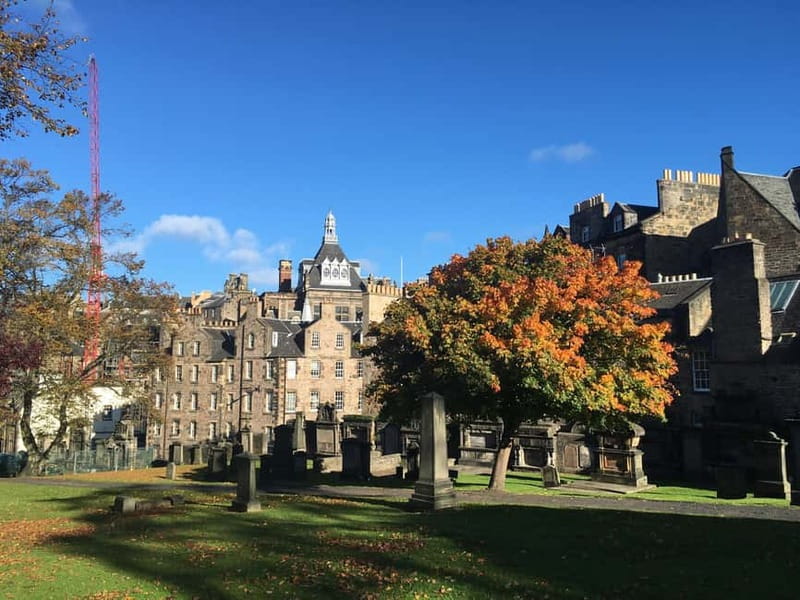
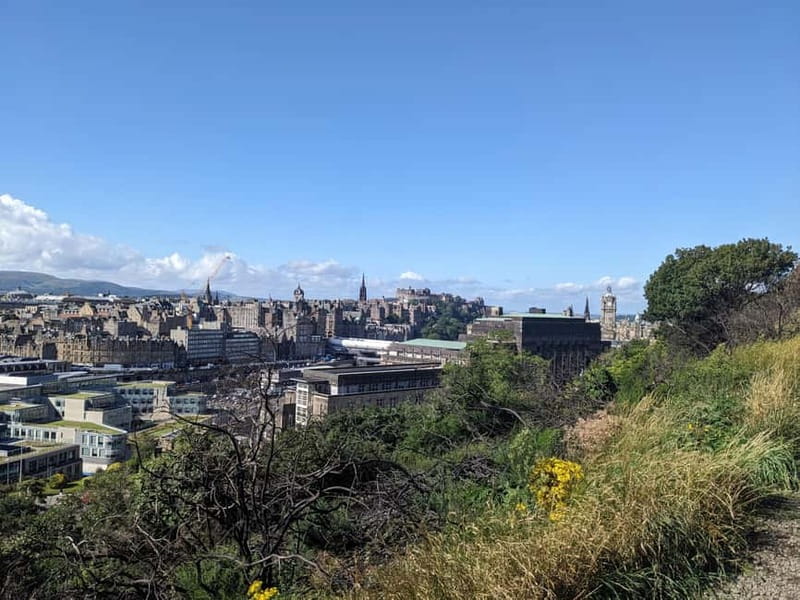
Most Edinburgh tours jump straight into the Old Town. This one starts smarter: you begin on Calton Hill, at the National Monument area, so you get the city’s logic before you follow it street by street.
Calton Hill works like a free “intro lecture” you can see. From there, the city’s layers start to click—where the prominent monuments sit, how the Old Town rises, and why people have always treated this city like a stage for symbols. It’s also a great way to judge distances. You’ll later walk through parts of the Old Town that look totally different once you’ve seen them from above.
On a practical note, the first leg of the tour is a walking start in open air. Scotland’s weather can change quickly, so bring a rain layer and something that handles both sun and drizzle. The good news: this tour keeps moving in normal rainy conditions, so you’re not stuck waiting out the day.
You can also read our reviews of more walking tours in Edinburgh



Scott Monument and the city’s habit of symbolism
From the Calton Hill viewpoint, the tour heads through a section that’s heavy on meaning—starting with the Scott Monument. This isn’t just “look, a tower.” Your guide uses it to help you read Edinburgh’s culture of public monuments: why they were built, what kinds of messages cities wanted to send, and how civic pride shows up in stone.
I like this part because it teaches you how to look. Instead of treating each stop as a photo opportunity, you’re learning the pattern: Edinburgh loves visible statements, and once you know that, you start spotting meaning everywhere—on street corners, on facades, even in how areas are laid out.
The Royal Mile: the main spine of the Old Town
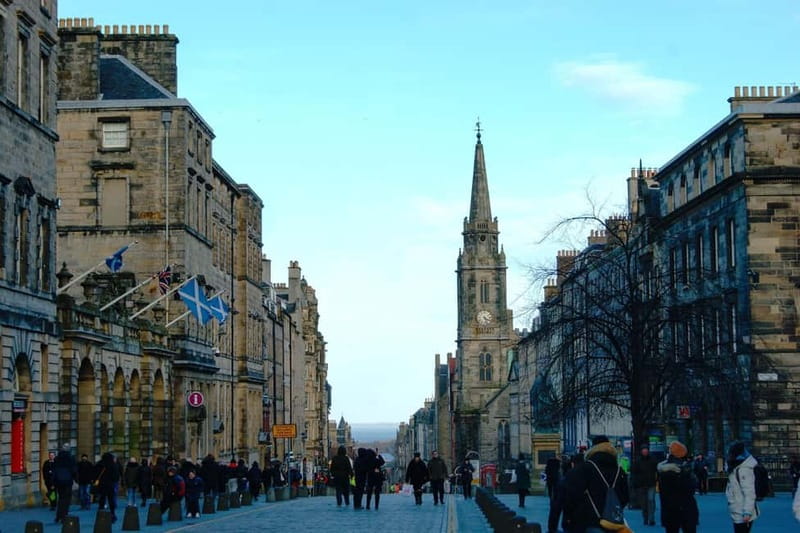
Next you hit the Royal Mile, one of the most important strings of streets in Edinburgh. This is where the tour shifts from “viewpoints and monuments” into “walking through history.” Along the Royal Mile, you’ll get a guided look at how the Old Town formed and what changed as Edinburgh grew.
This segment is especially valuable if you’re the kind of traveler who likes understanding the basics instead of just collecting names. Your guide talks about the Scottish way of life and adds context about the political system—things that can feel confusing when you first land in the UK.
Also, the Royal Mile is where you’ll start noticing the rhythm of the city: how the streets open and narrow, where foot traffic concentrates, and how the local “everyday” sits alongside the historic bones.
Mercat Cross and power in plain sight
The tour includes Mercat Cross, Edinburgh’s historic focal point linked to civic life. In most cities, “market crosses” can sound abstract. Here, your guide brings it back to real purpose: public gathering, official messaging, and the idea of seats of power you can point to on a map.
I like that your guide keeps steering toward questions you probably have but may not know how to ask at first. For example: Where did authority sit? How did official life show up in public spaces? Those answers make the next parts of the Old Town easier to follow.
If you’re someone who loves architecture but also wants story, this stop is a strong pairing. It’s brief enough to keep momentum, but it gives you a reason to care.
Edinburgh Castle: seen, not toured
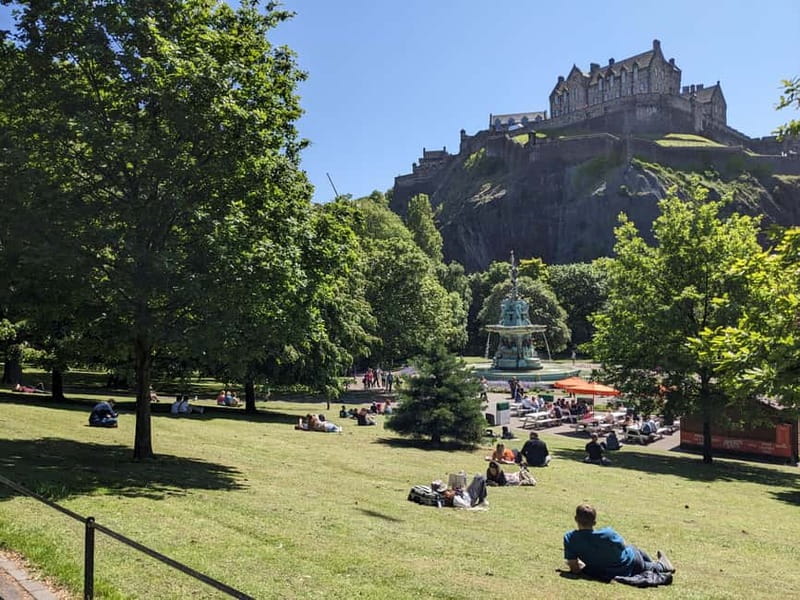
Edinburgh Castle is a highlight for almost everyone—but here it’s a pass-by. You’ll get the famous castle presence as you walk, and you’ll see why it dominates the Old Town skyline.
The benefit of not going inside is time. In three hours, you can’t do everything. Passing by the castle works well because you still get the “wow” factor, while the tour spends its limited time on the surrounding neighborhoods and the street-level context that helps the castle make sense.
The drawback is simple: if you were hoping for a full interior visit, this isn’t that tour. You’ll still see the structure and get context, but you won’t get the castle experience itself.




Victoria Street and the charm that feels lived-in
After the major civic spine, the route swings into Victoria Street. This stretch has that Edinburgh feel you want for photos and slow wandering: tight street angles, visual surprises, and a sense that the city has kept some personality even as tourism grows.
This is a good place to take the pace down a little. Even if you’re moving with the group, Victoria Street helps break up the more formal, monumental parts of the walk. It also gives you a quick sense of the city’s commercial side—how visitors and locals share space in the Old Town.
I’d call this stop a morale booster. By the time you reach it, you’ll have already gotten the big-picture story. Victoria Street lets you enjoy the details.
Grassmarket: views, edge, and the feel of the neighborhood
Next is Grassmarket, a part of Edinburgh that feels grounded and slightly rough-around-the-edges compared with the polished monument zones. Your guide frames it as part of how the city functioned—where people gathered, how life played out, and why this area’s character matters to understanding the whole Old Town.
This stop is also useful because it helps you connect the names you’ve heard to real places. Edinburgh can feel like a museum from far away, but Grassmarket brings it back to the idea of daily life and movement. It’s not just “historic buildings.” It’s streets where history and modern use overlap.
If you’re visiting when it’s very windy or wet, take your time here. Outdoor footing can get slippery, so good shoes matter.
Greyfriars Kirkyard: the cemetery stop that teaches you how Edinburgh remembers
Greyfriars Kirkyard is one of those stops that’s easier to appreciate once you understand how Edinburgh thinks about memory and place. The tour includes it as a guided segment before finishing near West Parliament Square.
This is a meaningful ending point because it’s quieter and more reflective than the Royal Mile rush. You’ll get context from your guide about the Scottish way of life and how communities connected identity to institutions and public spaces.
I like this stop because it shifts the mood. After monuments, civic points, and busy streets, you leave with a sense of the city’s softer side: remembrance, continuity, and the way Edinburgh marks time.
What you learn beyond sites (and why it matters)
A lot of “highlights” tours give you photos and a few facts. This one leans more toward understanding.
You’ll hear explanations tied to real questions like:
- Is Scotland a country, a nation, or a region?
- How Great Britain formed, and how that affects how you should think about the UK
- Where seats of power are in Edinburgh, and how public spaces reflect political life
- How buses and trains work at a practical level (enough to orient you)
- What to expect from pub culture and everyday habits
That matters because it changes how you move after the tour. You’re not just seeing Edinburgh. You’re learning how to interpret it. Later, when you’re choosing what to visit next, you’ll know how neighborhoods relate to each other and what kinds of places match your interests.
Also, the tour is French-only with a live guide, which is a big deal if you’re traveling in French. You get explanations at the speed of real language, without the “translate-it-in-your-head” tax.
Small group size: the difference you feel in a 3-hour walk
This tour caps at 11 people, which keeps it personal. In a walk like this, that’s not a luxury—it’s practical.
With a smaller group, you’re more likely to:
- ask quick questions without slowing everything down
- hear explanations clearly at each stop
- keep a steady pace without getting separated
It also makes the tour feel like a guided walk instead of a conveyor belt. For many people, that’s the core value of booking a walking tour in the first place.
Price and value: what $47 buys you in Edinburgh
At around $47 per person for a 3-hour guided walk, this is priced like a serious city orientation rather than a quick photo loop. The value comes from the combination:
- French live interpretation
- a tight itinerary that hits major Old Town landmarks
- a small group size
- guided context that connects monuments to politics and daily life
And there’s an added layer: a portion of the profits supports a local association working against poor housing. That doesn’t change the guide quality, but it does help justify choosing a tour that has local impact instead of purely extracting tourism value.
If you’re deciding between “solo wandering” and “guided navigation,” this tour is a strong mid-ground. You still get to walk and see the city close-up, but you’re not guessing what to prioritize or how everything connects.
Who this tour suits best
This is a great fit if you want:
- a structured walk through key Edinburgh sights in a limited time window
- a French-speaking guide for clearer explanations
- real context on Scottish and UK political life, not just dates and names
- a route that covers the major Old Town highlights without needing multiple separate tickets
It’s less ideal if you specifically want an inside-visit experience. Since Edinburgh Castle is only passed by, you’ll need other plans if you want to go inside.
Things to plan for: weather, walking, and comfort
Edinburgh’s weather is unpredictable, so plan like it can rain or get bright fast. Tours continue in rainy weather, except for days labeled amber warning or red warning by the Met Office, which can change cancellation terms closer to your visit.
Also, keep in mind that public toilets are limited in Edinburgh. If you’re sensitive to that, build a buffer into your day. If an emergency comes up, your guide will try to find a solution, but you might lose some time from the tour.
Finally, note the rules: bikes aren’t allowed, and alcohol and drugs aren’t allowed. If you’re thinking of bringing a drink or treating the walk like a pub crawl, you’ll need another plan.
Should you book this French walking tour of Edinburgh?
Book it if you want a smart, guided orientation that helps you understand the city’s structure fast—especially if you’re comfortable walking and you’d rather learn the connections between places than just take photos.
Skip it if your top priority is interior visits, because Edinburgh Castle isn’t toured here and other major stops like Holyrood Palace and Old Town underground passages aren’t part of this walk.
If you want a short, French-led route that gets you oriented quickly and teaches you how Edinburgh works day to day, this one earns its good reputation.