
REVIEW · EDINBURGH
Edinburgh: Crime and Punishment Walking Tour
Book on GetYourGuide →Operated by Walk The Old Town · Bookable on GetYourGuide
Edinburgh has murders in its stonework. What I love most is Charlotte’s handmade period costume and the way she turns major Old Town stops into a real crime map you can follow on foot, with small group pacing that leaves room to ask questions. One possible consideration: some sections run along busy main streets, so you may need to step in close to catch every theatrical moment.
If you’re into grim history, this tour makes it human instead of dusty. You’ll hear about Burke and Hare’s body-snatching years, Deacon Brodie’s double life, and even the fear-filled witch-trial era, all stitched to the streets you can actually see. And because it’s built around UNESCO World Heritage Old Town, you’re not just watching a show—you’re walking through the city’s story.
In This Review
- Key Highlights You’ll Care About
- Why This True Crime Walk Starts at St Giles’ Cathedral
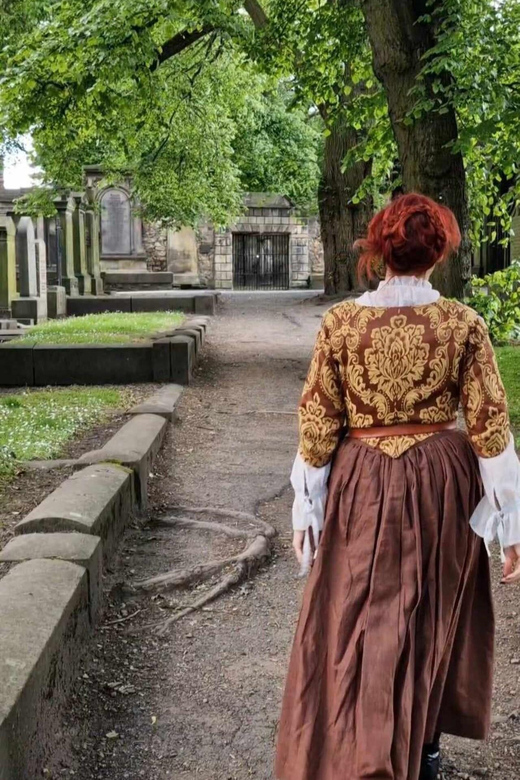
- Charlotte’s Handmade Costume Turns History Into a Street-Level Story
- Following the Royal Mile: Public Life, Crime, and Conspiracy
- Writers’ Museum: Where Literary Fame Meets Dark Fates
- Victoria Street, Grassmarket, and Candlemaker Row: The Streets That Feel Like Plot Points
- Greyfriars Kirkyard: Burke and Hare’s World and the Fear of Grave Robbing
- Greyfriars Bobby and George IV Bridge: From Grim Facts Back to Real Streets
- Witch Trials, Deacon Brodie, and the City’s Double Life
- What the 5+ Crime Scene Stops Add Up To
- Pacing, Fitness, and Getting the Most Out of the Walk
- Price and Value: What $24 Gets You in Edinburgh
- Weather, Umbrellas, and What to Bring to Stay Comfortable
- Who Should Book This Tour
- Should You Book the Edinburgh Crime and Punishment Walking Tour?
- FAQ
- Where do I meet for the Edinburgh Crime and Punishment tour?
- How long is the tour?
- What’s the group size?
- Is the tour wheelchair accessible?
- What language is the tour in?
- Are entrance fees to attractions included?
- Are food and drinks included?
- Is the tour canceled if it rains?
- Is the tour pet-friendly?
- Can I cancel or pay later?
Key Highlights You’ll Care About

- Costumed guide Charlotte bringing Old Town crime stories to life with performance-level storytelling
- St Giles Cathedral start tied to public executions and the legal world of old Edinburgh
- Greyfriars Kirkyard and Greyfriars Bobby where grave robbers and body snatchers loom large
- 5+ named crime-scene stops including Writers’ Museum, Royal Mile areas, Grassmarket, and Candlemaker Row
- Max 15 people for an intimate pace and better chances to ask questions
- Local concierge recommendations for more crime-themed places after the walk
Why This True Crime Walk Starts at St Giles’ Cathedral
St Giles’ Cathedral is a smart beginning. You’re not starting in some random street corner—you’re starting in a place that helped define public life in the Old Town, including punishment and spectacle. From the main entrance, you’ll meet your guide dressed in costume and carrying an umbrella, which is a nice touch because Edinburgh weather loves surprises.
In the first stretch, you’ll get the big picture: how power, religion, and the law shaped what people could do (and what happened to them when they didn’t follow the rules). It sets the tone fast. You stop thinking of Edinburgh as postcard-old and start seeing it as a working city with consequences.
And yes, this is a walking tour, so you’ll be outside on cobbles and close streets. That matters because you’ll notice the “street feel”—narrow routes, turns that funnel sound, and corners that make certain stories land harder.
You can also read our reviews of more walking tours in Edinburgh



Charlotte’s Handmade Costume Turns History Into a Street-Level Story

The standout for me is the guide. Charlotte isn’t just reciting facts. She’s using performance, period costuming, and clear storytelling to make people remember the details. Several guests specifically call out her energy and enthusiasm, and you can feel that in how she paces the walk.
The costume does more than look good in photos (though it is very photogenic). It helps you shift into the right mindset: this isn’t modern crime trivia. You’re hearing about murders, executions, and conspiracies that played out in a world where justice was public, and rumors traveled fast.
I also like that the tour seems to adapt to the group. In at least one instance, people had a very small group setup, even private-style attention. So if you’re the type who loves to ask, your questions are more likely to get a real answer instead of a quick nod.
Following the Royal Mile: Public Life, Crime, and Conspiracy

Once you move away from St Giles’ Cathedral, you’re in the heart of Old Town—especially the Royal Mile. This is where you’ll hear how public spaces could become stages for violence and political trouble. The tour ties real historical crimes to real locations you can point at while you walk.
You’ll get guided stops along the Royal Mile area and then continue toward other specific streets. The value here is practical. Instead of a general “Edinburgh used to be scary” talk, you’re guided to particular addresses and named areas where different stories unfolded. That turns the walk into a map you can revisit later, even if you forget every year number.
A possible downside with any Old Town walking route is that main streets can get busy. If you’re serious about catching every line of the theatrical storytelling, keep an eye on where you’re standing in the group. Staying closer to Charlotte will make a difference.
Writers’ Museum: Where Literary Fame Meets Dark Fates
The Writers’ Museum stop is one of the best “wait, really?” moments on the route. You’re going to connect famous writing with darker outcomes—ideas that feel uncomfortable until you see how closely reputation, work, and danger could overlap in historical Edinburgh.
Even if you don’t call yourself a literature person, this stop helps you understand the city’s social layers. Edinburgh wasn’t just criminals and executions. It had writers and cultural life too—and the stories of that world often intersected with the same streets where punishment and scandal played out.
If you like your history explained in plain terms, this portion is likely to land. It shows that crime wasn’t a separate universe. It was part of the same neighborhoods and social networks.
Victoria Street, Grassmarket, and Candlemaker Row: The Streets That Feel Like Plot Points
After the museum, the tour shifts into the kind of street-hopping that makes walking tours worth it. You’ll pass through key Old Town sections like Johnston Terrace, Victoria Street, Grassmarket, and Candlemaker Row—each one used to support a different thread of the story.
Here’s what I like about this approach: it turns the city into a sequence. You’re not just visiting landmarks; you’re moving through an evolving narrative.
- Grassmarket gives you that classic Old Town energy—built for trade and close contact between classes. That’s where “crime and punishment” stops feeling like a slogan and starts feeling like social reality.
- Candlemaker Row adds a darker, more intimate alleyway vibe, which is perfect for stories where you can picture whispers, shortcuts, and stolen moments.
One practical note: these areas can be crowded, and narrow streets mean you’ll sometimes have to adjust your position to keep your view and hearing. It’s not a deal-breaker—just plan to walk at a relaxed pace and stay aware of foot traffic.




Greyfriars Kirkyard: Burke and Hare’s World and the Fear of Grave Robbing
The real heavy-hitter on the walk is Greyfriars Kirkyard. This is where the tour’s “dark secret” promise stops being dramatic marketing and starts feeling grounded. You’ll connect the setting to stories about body snatchers and grave robbers, including the famously grim Burke and Hare era.
The setting helps. A kirkyard isn’t just a background—it’s a place people lived with emotionally. When your guide talks about stolen bodies, you can’t help but feel the discomfort of it. It’s not a distant crime story; it’s tied to how the community thought about death, dignity, and punishment.
The tour also links the churchyard to the wider web of criminal activity in Edinburgh. In other words, it’s not only about one pair of names. It’s about a system of risk and opportunity that existed in the shadows.
Greyfriars Bobby and George IV Bridge: From Grim Facts Back to Real Streets
Right after Greyfriars Kirkyard, you’ll step toward Greyfriars Bobby, a stop that brings a different emotional tone without removing the darkness. It’s a useful shift. You’ve just been listening to grim body-snatching and theft, and then you get a human-scale moment tied to local memory.
From there, the walk continues through areas like George IV Bridge. This matters because it shows you how these stories sit inside daily geography. You’re not looking at a crime scene in a museum case. You’re seeing where it connects to normal walking routes and modern city life.
And since the itinerary brings you back toward the Royal Mile before returning to St Giles’ Cathedral, you finish with a sense of closure. You can mentally stitch the whole route together: where the law lived, where public life moved, and where the fear lived in the margins.
Witch Trials, Deacon Brodie, and the City’s Double Life
A tour like this lives or dies on variety, and this one doesn’t only stick to one flavor of crime. You’ll hear about:
- Deacon Brodie’s double life—a story that’s almost too believable, because it’s about respectability on the outside and criminal choices behind the scenes.
- The witch trials—a reminder that persecution wasn’t limited to thieves and murderers. Fear could become an engine.
- Burke and Hare—body-snatching crimes that show how people exploited the vulnerable and violated what communities held sacred.
This mix is valuable because it gives you a fuller picture of how punishment and fear worked in historical Edinburgh. Crime wasn’t only about violence. It was about reputation, power, belief, and the harsh control systems that people used to police those things.
What the 5+ Crime Scene Stops Add Up To
This tour hits 5 or more notorious crime scene locations, with named stops including Writers’ Museum, St Giles’ Cathedral, and Greyfriars Kirkyard, plus multiple Royal Mile-linked points and Old Town streets. The practical benefit is that you’ll come away with a “route brain.”
That means you can do two things after the tour:
1) revisit key stops with more context, and
2) keep your own eyes open for other historical markers you might miss on a casual stroll.
And because you’ll also receive local concierge recommendations for more crime-themed attractions and mysterious pubs, the guide isn’t only giving you stories during the walk. They’re helping you build the rest of your evenings and sightseeing days.
Pacing, Fitness, and Getting the Most Out of the Walk
The pace is described as relaxed, and it’s offered as suitable for all fitness levels. That’s good news in a city where cobbles can get annoying fast. One review specifically mentions that Charlotte didn’t rush someone with mobility issues, which tells me the tour is attentive to real-world needs rather than forcing everyone to keep up.
Also, this route is designed to be wheelchair and mobility scooter accessible. If you use a wheelchair, note that the tour doesn’t provide rentals—so you’ll want to bring your own.
Duration is listed in the details as 1.5 hours, while the tour description frames it as a roughly two-hour experience. In practice, that usually means you should plan for about 1.5–2 hours walking plus guided stops.
Price and Value: What $24 Gets You in Edinburgh
At $24 per person, this is priced like an experience where the cost is mostly paying for storytelling and guide performance—not entrance fees. That matters because entry fees aren’t included; you get recommendations instead. So if you’re hoping your ticket covers museum admissions, it won’t.
What you are paying for is:
- an expert local guide in handmade historical costume,
- professional storytelling focused on murders, executions, and conspiracies,
- a small group format with a max of 15 people,
- multiple named locations tied to crime history,
- and local “what to do next” concierge suggestions.
For me, the value comes from focus. A general Old Town tour will give you history. This one gives you a storyline with specific places. If you’re the kind of traveler who likes to walk with a theme and remember what you saw, that theme-heavy structure is worth it.
Weather, Umbrellas, and What to Bring to Stay Comfortable
Edinburgh’s weather is unpredictable, and this tour basically assumes you’ll be ready. Bring a jacket and weather-appropriate clothing. The guide meeting setup includes an umbrella, and it’s common sense: you’ll be outside the whole time.
You’ll also want:
- a camera for the Instagram-worthy photo opportunities,
- comfortable walking clothes, and
- an umbrella if rain is in the forecast.
If you care about hearing details during busier street stretches, wearing a hood up can help keep you comfortable, but also try not to hide your face so you can stay oriented with the group.
Who Should Book This Tour
You’ll likely love this if:
- you enjoy true crime and historical mysteries,
- you want Old Town facts tied to specific locations instead of broad overviews,
- you like performance-style guides (Charlotte’s costume work matters here),
- you’re traveling with teens or adults curious about darker history (it’s noted as suitable for ages 12+).
If you prefer only light, upbeat history, this is probably not your first choice. But if you like your sightseeing with teeth—crime, punishment, and the stories behind the stone—this walk is built for you.
Should You Book the Edinburgh Crime and Punishment Walking Tour?
I’d book it if you want one high-impact walk that gives you a clear narrative through Old Town. The price is reasonable for a guide-led storytelling experience, and the small group size helps you hear the details instead of getting lost in a crowd.
The only real reason to hesitate is practical: some parts of the route can be busy, so if you’re easily distracted by street noise or you hate tight spaces, you’ll want to stay close to the guide and keep your expectations flexible.
If you’re okay with that, you’ll come away with more than photos—you’ll have a mental route through Edinburgh’s darker corners that you can revisit on your own.
FAQ
Where do I meet for the Edinburgh Crime and Punishment tour?
Meet at the main entrance of St Giles’ Cathedral. The guide will be dressed in costume and carrying an umbrella.
How long is the tour?
The duration is listed as 1.5 hours, and the tour description also describes it as a roughly 2-hour guided walking experience.
What’s the group size?
The tour is a small-group experience with a maximum of 15 people.
Is the tour wheelchair accessible?
Yes. The route is wheelchair and mobility scooter accessible. Wheelchair rental is not included, so you should bring your own if you need one.
What language is the tour in?
The tour is in English.
Are entrance fees to attractions included?
No. Entry fees to attractions are not included; you’ll receive recommendations.
Are food and drinks included?
No. Food and drinks are not included.
Is the tour canceled if it rains?
No. It’s rain or shine with a rain or shine guarantee.
Is the tour pet-friendly?
Yes. All pets are welcome if you can safely carry them outdoors. Water access is provided on the route.
Can I cancel or pay later?
Free cancellation is available up to 24 hours in advance for a full refund. You can also reserve now and pay later.