Streetlights make the Royal Mile feel different. This nighttime walking tour covers the Royal Mile’s big landmarks and the quieter lanes in between, with a guide’s story connecting what you’re seeing to what happened there. I love the small-group size, because you actually hear the details and not just the loudest voices, and I also like how the guide ties together multiple eras in a short time. One thing to consider: refreshments aren’t included, so plan for a snack or drink before you start.
You’ll walk for about 2 hours starting at Abbey Strand (EH8 8DU) and ending outside Edinburgh Castle in Castlehill (537 Royal Mile, EH1 2ND). It’s an English-language tour with a mobile ticket, and the route is paced so most people can participate, assuming you’re good with walking.
In This Review
- Key things I’d circle before you go
- Why this Royal Mile evening tour works so well
- Price and what you’re really paying for
- Starting at Abbey Strand and ending outside Edinburgh Castle
- The stop-by-stop route: what each part adds
- 1) The King’s official residence in Scotland
- 2) One of Edinburgh’s hidden gems
- 3) A former separate burgh: church and tolbooths
- 4) Backhouse Close and a step back to the 1500s
- 5) Old City Wall and an Outlander film location
- 6) Goldsmiths House (late 1400s) linked to John Knox and Mary Queen of Scots
- 7) In front of the Cathedral: the site of the infamous Edinburgh tolbooth
- 8) Place of proclamations and punishments
- 9) City Chambers built on older closes
- 10) Hidden gems from the 1580s
- 11) Lady Stair’s House dating to the 1620s
- 12) One of Edinburgh’s oldest Old Town buildings
- Small-group size: why it matters more at night
- What to wear and how to plan your evening
- Who this tour suits best (and who might want to skip)
- Should you book Royal Mile Walking Tour Small Group?
- FAQ
- How long is the Royal Mile Walking Tour Small Group?
- What is the price per person?
- Where does the tour start and end?
- How many people are in the group?
- Is the tour offered in English?
- Do I get a ticket on my phone?
- Are refreshments included?
- Is the tour accessible for most people?
- Can I cancel for a full refund?
Key things I’d circle before you go
- Two-hour evening pacing: enough time to see key sights without eating your whole night
- Small group (up to 12): you get more attention from your guide as you move stop to stop
- Tolbooths and punishments context: the Royal Mile gets much more meaningful when you learn what those buildings were for
- Closes, walls, and hidden corners: you’ll spend real time on the narrow lanes that make Old Town feel like a maze
- Outlander film location stop: pop-culture nods that don’t replace the real history
- Connections to John Knox and Mary Queen of Scots: you’ll hear why certain “ordinary” buildings matter
Why this Royal Mile evening tour works so well
Edinburgh’s Royal Mile is busy in daylight. At night, it’s a different experience. The buildings look taller, the lanes feel tighter, and the stories you hear land better because you’re not fighting crowds or tour buses.
This is a guided walk, not a self-guided stroll. That matters, because the Royal Mile’s power is in the layers: medieval street life, later “burgh” boundaries, religious politics, civic punishments, and the city’s odd habit of building over older spaces. With a good guide, those layers stop being random facts and start forming a picture.
I also like that the tour is short enough to feel focused. You’re not asked to conquer a huge list of sites all day. Instead, you get a concentrated sweep of Old Town highlights and side streets, which is perfect if you already have plans during the daylight hours.
The final practical point: it’s a walk with no stated refreshments. If you tend to get hungry or thirsty fast, bring your own pre-planned snack and water so the tour stays enjoyable instead of turning into a mid-walk hunt.
You can also read our reviews of more walking tours in Edinburgh



Price and what you’re really paying for
At $47.73 per person for about 2 hours, this price sits in the “fair for a guided evening tour” range—especially when you’re paying for interpretation. You’re not just buying entry to places. You’re buying:
- a route built around the Royal Mile’s key stories,
- a guide’s commentary to connect places that otherwise feel disconnected,
- and a group size capped at a small number so the pacing stays human.
That value gets even better if you’re the type who likes knowing what you’re looking at while you’re walking. If you prefer wandering with zero structure, this might feel like a lot of “talk while moving.” But if you want history that sticks, a guided night route is one of the better uses of your time.
Starting at Abbey Strand and ending outside Edinburgh Castle
Your tour begins at Abbey Strand, Edinburgh EH8 8DU, and finishes outside Edinburgh Castle on Castlehill (the listing shows 537 Royal Mile, EH1 2ND).
That start/end combo is practical. Abbey Strand puts you close to a central Old Town approach, and finishing near the castle area lets you tack on one more short stop afterward—like a nighttime look at the castle neighborhood or a last snack nearby—without needing extra travel.
Because the ending is outside the castle, plan on the tour flow rather than expecting indoor admissions. The value here is in the walk and the commentary, not in waiting in lines.
The stop-by-stop route: what each part adds
Below is what you can expect from the sequence of stops. I’ll focus on why each one is worth your attention, and what can be a mild drawback depending on your interests.
1) The King’s official residence in Scotland
You start with the King’s official residence in Scotland. Even if you’re not there for the politics, it’s a useful anchor. It helps set the Royal Mile’s tone: this street isn’t just pretty stone—it’s tied to power and public image.
What to watch for: the way buildings and sightlines align with the street. Your guide’s job here is to show how the city’s layout supports the story of authority and ceremony.
Possible drawback: if you came for pure gothic alley vibes, this opening may feel like a more formal start before the lanes and closes get rolling.




2) One of Edinburgh’s hidden gems
You’ll hit one of Edinburgh’s hidden gems next—exactly the kind of stop you usually only notice if you’re already lost in the right direction.
Hidden corners matter on this tour because the Royal Mile isn’t only a single straight view. The personality of Old Town lives in the offshoot streets, doorways, and narrow passages that cut through the big-scene photography.
What to watch for: small details—street-level marks, unusual angles, and anything that suggests older pathways rather than modern planning.
3) A former separate burgh: church and tolbooths
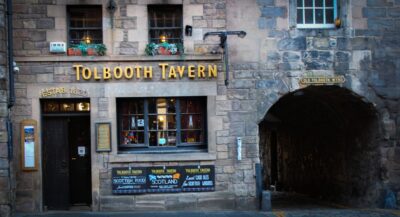
Next is a place that used to be a separate burgh, where you’ll hear about the church and tolbooths history.
This is where the Royal Mile stops feeling like “a list of famous stops” and starts feeling like a functioning city. Tolbooths were serious civic buildings—places tied to justice and public punishment. Hearing that context while you stand near the spaces makes the city feel less like a museum.
What to watch for: how the guide connects the idea of community boundaries (burgh lines) with the buildings you’re seeing.
Possible drawback: if you dislike punishment-focused history, this section might feel heavier. Still, it’s part of why the Royal Mile tells such a strong story.
4) Backhouse Close and a step back to the 1500s
Then you’ll walk into Backhouse Close, described as a place that takes you back to the 1500s and its reputation for ill behavior.
Closes are one of Edinburgh’s best “texture” features—narrow lanes that feel sheltered and a bit secret. This stop gives you that atmosphere while your guide explains what it meant for people living and working there.
What to watch for: how the close changes the sound and light as you move through it. It’s not just scenery; it’s part of why the place had the reputation it did.
5) Old City Wall and an Outlander film location
After the close, you’ll see parts of the Old City Wall and an Outlander film location.
This is a smart pairing: the wall gives you the real defensive logic of the city, and the film reference helps modern visitors relate. The key is that the story stays grounded—film location stops work best when they’re tied back to the city’s actual form and history.
What to watch for: how the wall remnants shape the street layout. Even small sections can explain why some corners exist and others don’t.
6) Goldsmiths House (late 1400s) linked to John Knox and Mary Queen of Scots
One stop is a building dating to the late 1400s, known as Goldsmiths House, with connections to John Knox and Mary Queen of Scots.
This is a big deal for several reasons. First, it’s a time jump: you go from late medieval Edinburgh into the religious and political turbulence tied to those two names. Second, the “goldsmiths” angle reminds you that history wasn’t only made by nobles—it was also shaped by trades and the people who lived near power.
What to watch for: what your guide says about connections. Even when you can’t see “a castle” from here, the building links you to the politics of the time.
Possible drawback: if you’re expecting major interior access, this tour is mostly outside views and street-level interpretation.
7) In front of the Cathedral: the site of the infamous Edinburgh tolbooth
Next, you’ll stand at the area in front of the Cathedral, described as the site of the infamous Edinburgh tolbooth.
This is one of the tour’s strongest history moments because it ties all the earlier tolbooth talk to a specific physical location. When you hear about proclamations, punishments, and civic control in the right setting, the city becomes more understandable.
What to watch for: how the guide uses the space around the cathedral area to explain public life—where people gathered, what was announced, and how punishment played out as a kind of public message.
8) Place of proclamations and punishments
After that, you’ll hit the Place of Proclamations and punishments.
Think of this as the “what it meant day-to-day” stop. You’re not only learning about architecture; you’re learning about how authorities spoke to the public and how the city enforced rules.
What to watch for: the way the guide translates official language into real human consequences.
9) City Chambers built on older closes
Then comes the City Chambers, described as built on the site of several closes with a long history.
This is one of those Edinburgh facts that makes you rethink what you’re seeing. A close is a street, but it’s also a space where multiple layers of life happen. When something like City Chambers sits on older lanes, you’re looking at a kind of overwrite—new power placed where older life existed.
What to watch for: how the city keeps moving forward while still keeping traces of the past.
10) Hidden gems from the 1580s
You’ll also see hidden gems dating to the 1580s.
This is the middle-to-late part of the walk where the tour can really pay off for people who love atmosphere. Dates help, but the bigger win is that you’re watching the city “reveal itself” as you keep turning corners instead of stopping only at famous facades.
What to watch for: older-looking street details and doorways—those small transitions often carry the date clues your guide will mention.
11) Lady Stair’s House dating to the 1620s
Next is Lady Stair’s House, dating to the 1620s.
This stop is about showing you how Old Town evolved. When you hear about the 1620s on the same walk as medieval sites, you start to notice how time layers the street.
What to watch for: any features your guide points out that signal the period—again, even without entering, you’ll often see enough to follow the story.
12) One of Edinburgh’s oldest Old Town buildings
Finally, you’ll reach one of the oldest buildings in Edinburgh’s Old Town, where you’ll hear its history before the tour ends near Edinburgh Castle.
This is a satisfying wrap-up. By the time you get here, you’re not just staring at a historic structure—you’re reading it, because you’ve already learned the Royal Mile’s pattern: power, trade, justice, and the city’s close-knit street system.
Possible drawback: because it’s the last stretch, don’t plan to arrive tired. Give yourself enough energy so you don’t miss the final story beats.
Small-group size: why it matters more at night
This tour is capped at 12 travelers (and the highlight says it can be even tighter, around 10). On a daytime sightseeing bus tour, big group size is normal. On a nighttime walking tour through tight Old Town lanes, it can change your whole experience.
With fewer people, your guide can:
- slow down when you’re near the close or wall sections,
- explain context at street level,
- and keep the group together so you don’t miss the next story.
If you’re someone who likes to ask questions, this size tends to make that easier.
What to wear and how to plan your evening
You’re walking an Old Town route after dark, with multiple changes in pavement, close entrances, and street-level stops. Plan for simple things:
- Wear comfortable shoes with good grip.
- Bring a layer. Night temps can shift fast, and you’ll be outside between stops.
- If you get hungry, plan a small snack before you start since refreshments aren’t included.
This tour also pairs well with other Edinburgh plans. The finish near Edinburgh Castle is a good setup if you want to linger in the area after the walk.
Who this tour suits best (and who might want to skip)
I think this works best for you if you:
- want a guided, story-based way to understand the Royal Mile,
- like mixing famous sights with street-level surprises like closes and old walls,
- and enjoy history that explains how everyday civic life worked, including justice and proclamations.
You might consider skipping if you:
- hate walking for about two hours after dark,
- prefer strictly daytime visits with lots of open-space wandering,
- or you’re not interested in tolbooth and punishment history, since those themes show up clearly in the route.
Should you book Royal Mile Walking Tour Small Group?
Yes, if you want a short, guided evening overview that helps you read Edinburgh instead of just taking photos. The biggest strength is the combination of small-group pacing and stop-by-stop storytelling—especially around tolbooths, proclamations, and the city’s hidden lanes. At $47.73 for roughly 2 hours, it’s good value when you treat it like a history primer you’ll carry into the rest of your trip.
My main caution is simple: plan for the walk and the fact that refreshments aren’t included. If your schedule depends on guaranteed guide timing or you’re traveling with someone who struggles with walking, give extra attention to your buffer time before and after.
If that fits your style, this is a smart way to spend an evening on the Royal Mile—tight enough to be satisfying, focused enough to make the city feel less like a blur.
FAQ
How long is the Royal Mile Walking Tour Small Group?
The tour lasts about 2 hours.
What is the price per person?
The price is listed at $47.73 per person.
Where does the tour start and end?
It starts at Abbey Strand, Edinburgh EH8 8DU, UK and ends outside Edinburgh Castle in Castlehill at 537 Royal Mile, Edinburgh EH1 2ND, UK.
How many people are in the group?
The maximum group size is listed as 12 travelers.
Is the tour offered in English?
Yes, the tour is offered in English.
Do I get a ticket on my phone?
Yes, you’ll receive a mobile ticket.
Are refreshments included?
No, refreshments aren’t included.
Is the tour accessible for most people?
It’s described as suitable for most travelers, and service animals are allowed.
Can I cancel for a full refund?
Yes. You can cancel for a full refund if you cancel at least 24 hours before the experience’s start time. If you cancel less than 24 hours before, the amount paid won’t be refunded.