REVIEW · EDINBURGH
Edinburgh: Dean Village & New Town Walking Tour
Book on Viator →Operated by Edinburgh Walking Tours · Bookable on Viator
Quiet streets beat the tour crowd.
This Dean Village and New Town walk threads UNESCO-listed Edinburgh highlights with a calmer pace, starting in the old industrial lanes and finishing around St Andrews Square. I especially like how it pairs the postcard-soft scenes of Dean Village with big-city ideas—Georgian design, the Scottish Enlightenment, and Edinburgh’s “Athens of the North” reputation.
What I like even more is the way the guide connects buildings to people, from thinkers like David Hume and Adam Smith to writers such as Arthur Conan Doyle. One practical drawback: it’s outdoor walking, so you’ll want decent weather since the tour runs with “good weather” in mind.
In This Review
- Key highlights you’ll actually feel
- Setting Off: what this 2 hours feels like on your feet
- Dean Village: the water-mill calm you can reach fast
- Charlotte Square and the Georgian House: why Edinburgh calls itself Athens
- Rose Street and the idea of secret bars
- Castle Street and Princes Street Gardens: castle views without the climb
- Scott Monument: when a writer gets the biggest stage
- George Street and the Dome: statues, cafes, and neoclassical drama
- Melville Monument and Dundas House: colonial connections in stone
- Price and value: what $27.37 buys you (and why it adds up)
- Who this tour suits best
- Should you book this Edinburgh New Town and Dean Village walk?
- FAQ
- How long is the Dean Village and New Town walking tour?
- How much does it cost?
- Where does the tour start and end?
- Is there a local guide included?
- Is the tour a small group?
- Is a mobile ticket used?
- Are there entry fees for the stops?
- What kind of walking should I expect?
- Are service animals allowed?
- What if the weather is bad?
Key highlights you’ll actually feel
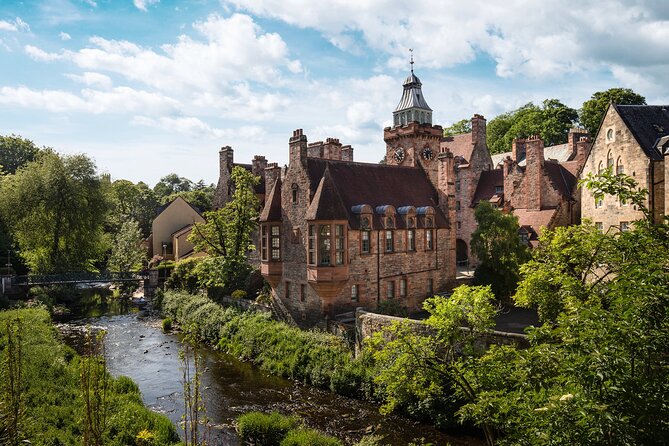
- Dean Village: a peaceful pocket near Princes Street, tied to medieval bread-making and water-mill work
- UNESCO New Town: crescents, squares, and neoclassical architecture that explain why Edinburgh is famous
- Big names in small streets: Scottish Enlightenment figures and what they meant for the city’s identity
- Viewpoints that don’t take effort: castle-and-rock views from Castle Street and Princes Street Gardens
- Monuments with real context: Scott Monument plus the colonial connections around Melville Monument
- Georgian and Palladio vibes: Georgian House and an architect inspired by Andrea Palladio at Dundas House
Setting Off: what this 2 hours feels like on your feet
This is a compact 2 hours 15 minutes walking tour, built for seeing a lot without sprinting. With a cap of 20 people, you’ll get space to hear the guide and actually follow the story from place to place.
Your start point is 2–4 Hope St, Edinburgh (EH2 4DB), and you finish outside Dundas House in St Andrews Square. If you’ve already done the Old Town’s tighter lanes, this route is a smart change of pace—more open squares, cleaner sightlines, and city planning you can read with your eyes.
You can also read our reviews of more walking tours in Edinburgh



Dean Village: the water-mill calm you can reach fast
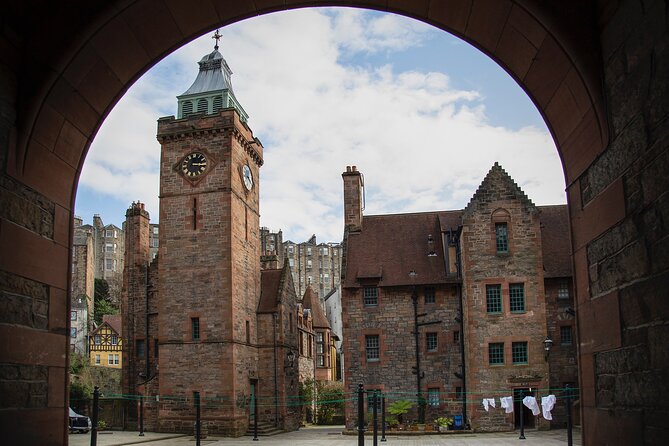
Dean Village is where the tour slows down—in a good way. It’s just a short jump from the busier areas around Princes Street, but the atmosphere feels different once you’re in the lane network. The story centers on how this area once worked like a medieval industrial hub, with water mills powering life, and with bakers and weavers living and working here.
At the first stop, you’ll see lingering physical hints from that past, including mill stones and stone plaques decorated with baked bread and pies. That matters because you’re not just hearing “history talk”—you’re looking at objects that still shape the mood of the neighborhood.
What to watch for: take a slow moment at each plaque or stone detail. Those small remnants are what make Dean Village feel real, not just scenic.
Charlotte Square and the Georgian House: why Edinburgh calls itself Athens
Next comes the New Town world—planned, elegant, and deliberately different from the tight medieval streets of the Old Town. At Charlotte Square, you’ll see classic neoclassical architecture, and the guide ties it to Edinburgh’s nickname the Athens of the North.
This part of the walk also connects architecture to status. Outside the Georgian House (National Trust for Scotland), you’ll get a sense of how “high society” would have lived in the 18th and 19th centuries—what the social idea of a Georgian mansion looked like, and why the New Town design was built to impress.
Why this is valuable: it’s one thing to admire beautiful facades. It’s another to understand that these spaces were designed for power, connection, and display—so the architecture becomes a clue, not wallpaper.
Rose Street and the idea of secret bars
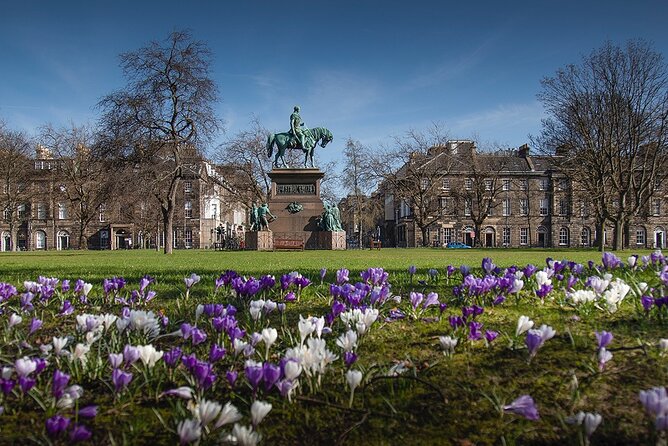
From Charlotte Square, the tour moves toward the New Town grid, then drops into Rose Street, famous for pubs. Here’s where the guide adds a plot twist: you’ll learn the reason behind the establishment of secret bars in the New Town.
I like this stop because it breaks the “architecture-only” feeling. A pub street is where modern Edinburgh energy lives, but the secret-bar idea adds a layer: nightlife (and social life) was shaped by the same city planning and class structure that built the grand squares.
Tip: if you’re traveling with friends who only do “top sights,” this is the moment to convince them. It’s fun, specific, and it gives you something to picture later when you walk into a pub.
Castle Street and Princes Street Gardens: castle views without the climb
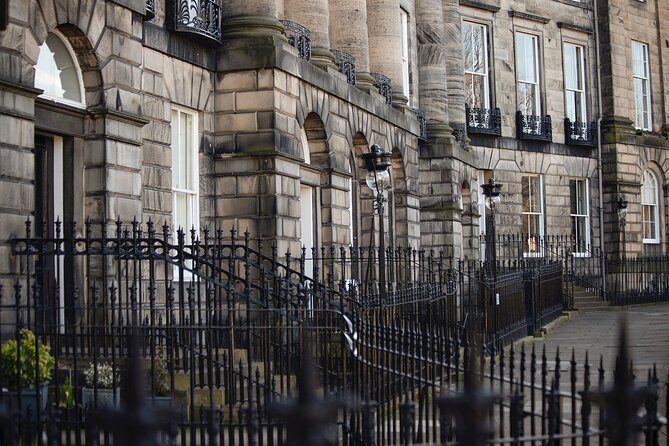
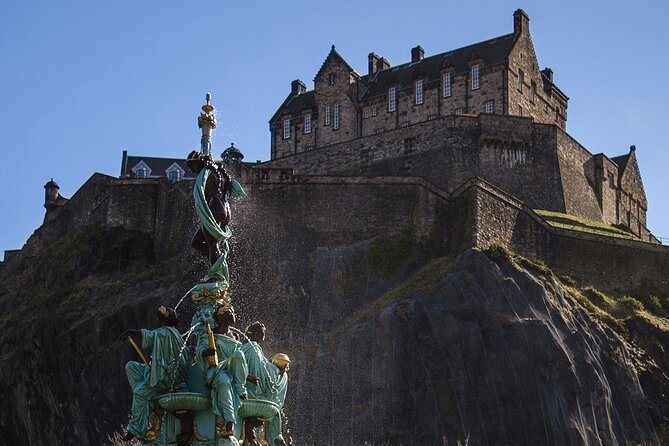
Then you get one of Edinburgh’s best payoffs: views. From Castle Street, the route sets you up for a strong look at the castle and castle rock.
After crossing into Princes Street Gardens, you’ll pause again—this time with a wide, open-feeling view plus examples of public art. The gardens give you a natural stage: you can see the castle clearly without fighting the crowds in the most intense sightseeing zones.
Possible downside to consider: this is the most “camera-friendly” stretch, so expect people around. If you hate elbow-to-elbow viewing, keep your phone ready but don’t rush the listening.




Scott Monument: when a writer gets the biggest stage
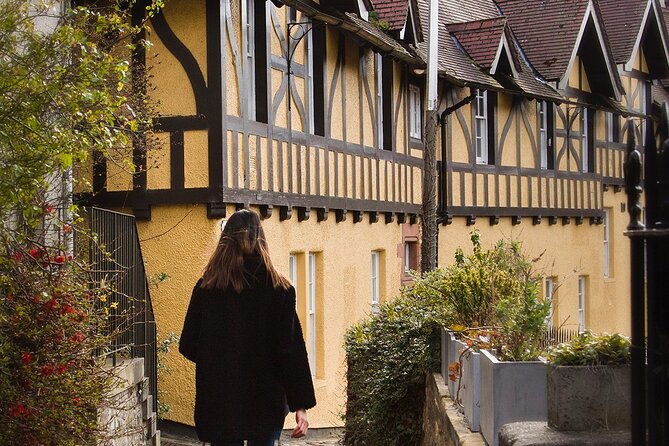
From the gardens, you head toward the Scott Monument, one of Edinburgh’s landmark structures. The guide explains its history and architecture, and shares a fun fact that actually lands: it’s the largest monument in the world dedicated to a writer.
This is a great stop for anyone who likes the Scottish Enlightenment story but worries it’ll feel textbook. Monuments make ideas visible. You’re seeing how a city publicly honors authorship, imagination, and national identity—not just commerce.
If you’re the type who likes to connect names to places, this is a strong midpoint marker before you continue along the New Town’s stylish streets.
George Street and the Dome: statues, cafes, and neoclassical drama
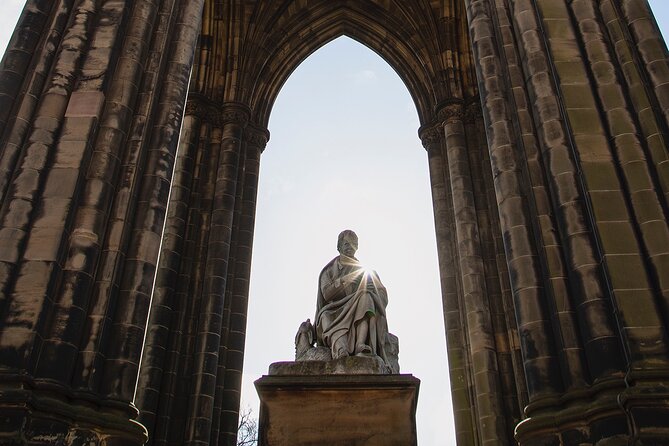
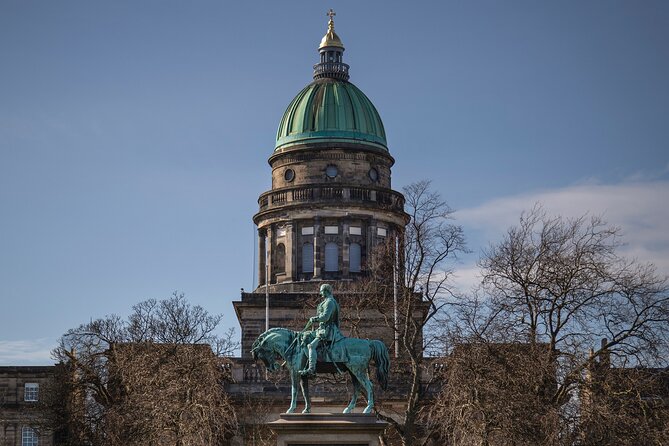
Heading back through the New Town grid, you walk the east side of George Street, where the vibe shifts toward dining and storefronts. The guide points out statues, including ones dedicated to King George IV and James Clerk Maxwell, so you’re not just passing them—you’re learning who they represent and why they show up here.
A short hop later, you’ll see the Dome, another stop focused on impressive neoclassical buildings. This area works well if you’re the kind of traveler who likes to “read” the city like a design plan. Even when you’re standing still, you can spot the style choices and understand what they signal.
Practical angle: since George Street is restaurant-heavy, this is an easy area to plan your next meal without backtracking.
Melville Monument and Dundas House: colonial connections in stone
The later part of the walk turns more reflective. At Melville Monument, you’ll hear why it was built and how it connects to British colonial time. I like when tours handle this topic directly, because it reminds you the city’s beauty didn’t come from nothing—it came alongside power and expansion.
Across the street sits Dundas House. The guide explains that the architect was inspired by the books of the Italian Renaissance architect Andrea Palladio. Today it’s used as a bank, and if it’s open, you may be able to enter—otherwise you’ll still get the architectural point of view from outside.
Why this ending works: you finish where the New Town’s confidence and influence show up in a single block of stone. St Andrews Square is a practical finish too, since you can keep walking or connect to transit easily from there.
Price and value: what $27.37 buys you (and why it adds up)
At $27.37 per person for about 2 hours 15 minutes, the value is mainly in the guide and the way the route is built. You’re not paying for entry tickets at named stops, because the stops described are admission ticket free in the itinerary notes.
Instead, you’re paying for interpretation: how the Scottish Enlightenment story links to the planned New Town, why Georgian life mattered, what secret bars have to do with social rules, and how monuments carry politics in their design and placement. That’s the difference between seeing buildings and understanding them.
Also, small group size (max 20) helps. In a city like Edinburgh, where you can waste time at crowded viewpoints, a guide who can steer you between meaningful stops is worth real money.
Who this tour suits best
This walk is a great fit if you want:
- UNESCO New Town architecture without getting lost in it
- A break from the Old Town’s tight lanes while still feeling like you’re in “real Edinburgh”
- Clear connections between famous names (Hume, Smith, Conan Doyle, Maxwell) and the places you see
- Castle views plus neighborhood atmosphere in one smooth loop
It’s also ideal if you’ve already done a more intense sightseeing route and want something calmer. Dean Village gives you that mental reset, then the New Town squares bring you right back to the “big ideas” side of the city.
Should you book this Edinburgh New Town and Dean Village walk?
I’d book it if you like your sightseeing with explanations and you enjoy architecture tied to real human stories. This is the kind of tour that helps you walk back out onto Edinburgh streets with better context—so the city starts making sense fast.
I would skip it only if you hate outdoor walking or you’re traveling on a day where weather is questionable. Since the experience is designed to run in good conditions, plan a backup day if your forecast looks shaky.
If you do book, pick this as a morning or afternoon slot when you still have energy to linger at the viewpoints. And if your guide is Irene, you’ll likely enjoy the extra warmth and practical suggestions, including local food ideas for after the walk.
FAQ
How long is the Dean Village and New Town walking tour?
It runs for about 2 hours 15 minutes.
How much does it cost?
The price is listed as $27.37 per person.
Where does the tour start and end?
It starts at 2–4 Hope St, Edinburgh (EH2 4DB) and ends outside Dundas House in St Andrews Square (Edinburgh EH2 2YB).
Is there a local guide included?
Yes, the tour includes a local tour guide.
Is the tour a small group?
Yes. The maximum group size is 20 travelers.
Is a mobile ticket used?
Yes, the tour uses a mobile ticket.
Are there entry fees for the stops?
Admission ticket entry is shown as free for the listed stops, and the tour focuses on walking viewpoints and architectural areas.
What kind of walking should I expect?
It’s a walking tour through multiple neighborhoods, with several stops along the New Town and Dean Village.
Are service animals allowed?
Yes, service animals are allowed.
What if the weather is bad?
The tour requires good weather. If it’s canceled due to poor weather, you’ll be offered a different date or a full refund. There is free cancellation up to 24 hours in advance for a full refund.